
April 24th, 2024
Fascism for You: Prophet Song
I have a book club meeting about Prophet Song by Paul Lynch and sometimes I like to get my thoughts written out before a meeting, so I can see what I actually think before I talk to people about a book and accidentally take on all their views–I’m easily impressionable. I read this book at a fast clip because I wanted to go to the meeting, which more and more I think is the best way for me to read–then I live inside the book, carried along with the characters, and even if I don’t like the book that much I’m inclined to finish it because it has in some way become my life.
I didn’t like Prophet Song that much but I was definitely gripped by it and had no trouble reading quickly. That’s saying something–Lynch has written this incredibly grim miserable story in these massive multi-page paragraphs with everyone’s dialogue run into together with no quotation marks, and I had no trouble with it. The writing is incredibly strong–not beautiful, but servicable and clear–which is usually damning with faint praise but in this case, if it weren’t an extremely well-written book, I likely would have dropped it. So it had to be. I turned in a paper for my night class and the prof said it was fantastic except lack of paragraph breaks so I guess we could say Lynch made an impression.
The novel is actually about Ireland in a present-day alternative reality falling under a fascist regime for unstated reasons and eventually into all-out war, lawlessness, ruin, and chaos. The story is presented through the experiences of one family the Stacks, as viewed through the eyes of the mother, Eilish. Her husband, Larry, leads a teacher’s union and decides to lead a union march early in the novel when things are only mildly oppressive and is disappeared during a garda (police) intervention there. Eilish must continue to work and care for her four children, ranging in age from 1 to 17, as things in the country get stranger and worse.
The reasons for the regime change in Ireland, and how things get so out of hand are completely unstated, as are Eilish and Larry’s reasons for not knowing how the winds are blowing–Lynch just wanted to write a book about fascism in Ireland and so he did, but he didn’t make a convincing argument for how it could take root there (I think one could). I tried not to read too much about this book but I did find out that he has said a few times that he was inspired the Syrian refugee crisis to write PS and then it makes more sense–it is just a different war, transplanted to Ireland and to Irish people. Doesn’t make a tonne of sense but–ok.
Also this week I’ve been watching The Last of Us, which makes an incredibly strong narrative line for how fascism springs up in the United States in an alternative reality that includes zombies (it’s been a rough week for me, content-consumption-wise). Fascism isn’t even the point of that story, just background, but I think TLoU gets it really right in how governments have to do some pretty brutal stuff to stem the zombie tide and then, having alienated citizen trust and gotten used to brutality, they lean on the heavy hand. It’s a logical, thought-out story in a fully-imagined world (even the zombies, heaven help us, kind of make sense).
Neither story is really about the world-building, though, I don’t think–both are ostensibly about the people. Eilish’s life under increasingly tight restraint is drawn in painstaking detail–working and then losing her job, trying to get food, trying to find safe passage for her 17-year-old son before he is drafted on his birthday, trying to deal with her elderly father and his encroaching dementia. It’s all very very realistic, including instances where Eilish is brave and staunch and resolute and situations where she seems cowardly or at least, insistent on not seeing the facts as very obviously presented. I think this is how many of us would cope if our TV and sandwich and alarm clock worlds suddenly became perilous.
Unfortunately, I do not think Eilish is actually a well-drawn character, or much of a character at all–she has no interior life outside of a list of chores and demands, and no backstory, or even memories. Part of this is, I think, Lynch’s desire to write a kind of cypher or blank for every reader to imagine ourselves into–see, see, she’s middle-class, she’s married, she had a nice house and a car–just like YOU! She has a good job, YOU have a good job, reader, don’t you? Am I being too paranoid in thinking that Lynch has imagined the statistically most likely novel reader–a white middle-aged working woman with kids, a husband, a car, and a house–and then shown fascism destroying almost everything she holds dear to remind us that none of us is safe? MAYBE. But Eilish, while her actions are very apt, still sucks as a character. I haven’t read any of Lynch’s other work so I don’t know whether he can write women but I feel failed to write THIS woman. She has no feelings or even thoughts about her children–no memories of their younger years, no thoughts about how they look or funny things they say or hopes for their future. She has no interiority about her husband, his loss, her longing for him, memories of their romance and long marriage. She doesn’t admire his work with the teacher’s union or feel anger that he sacrificed himself for it. She has a single memory of him that repeats throughout the book–sometimes other people say it??–of him coming in the door and yelling for his slippers. Makes him sound like a jackass. Does anyone bring the slippers? Unknown. She is also weirdly self-absorbed. She’s certainly not worried about the wider implications of the demise of Ireland, or what is happening to her fellow citizens. There’s an odd insistence that no one has it worse than the Stacks–no enquiry into what poorer people, unhoused people, not-white people, people without connections are doing throughout the novel. Eilish and her family receive tonnes of help and almost never help anyone else or even feel any sympathy for anyone, but I couldn’t tell if this was a flaw of the novelist or the character.
Nevertheless, Eilish’s dumb paralysis in the face of encroaching disaster is very apt. At first, I felt that the whole character was stupid and she could have taken the opportunities to leave and then I started watching The Last of Us, and Pedro Pascal’s character Joel, who always makes the right decision and is tied to nothing and nearly a super-hero and wondered, who am I most like? I AM a middle-aged woman with a home and a husband and a job, and it would be very hard for me to give up what I have if I could convince myself there was any chance at all I didn’t have to. I have distant relatives who, in the 1930s, were begged by my less distant relatives to come to the US from Eastern Europe, and DIDN’T. They were prosperous where they were, and they knew if they left at a fraught time politically no one would protect their properties, and they would have to start over with nothing in the States. They weren’t young, and the branch that invited them was neither wealthy nor especially kind, but they wouldn’t let a relative actually die if they could prevent it. They couldn’t prevent it–the couple were taken to a concentration camp and the husband was murdered. These are decisions that people make when they are weighing the known versus the unknown.
I didn’t think that Prophet Song was a fantastic artistic object–it moves smoothly, but it’s deeply unpleasant to read, none of the characters seem real, and there were like 10 good lines in the whole thing (one was, when a toddler is forced to sit still in a grocery cart, he howled like his mother had “hauled him feral out of a hole.”) But as an emotional and intellectual exercise, it did something to me, and I will be thinking about it for a long time, and honestly, I guess I recommend folks brace themselves and try it.

March 26th, 2024
These Days Are Numbered on the Book Promotion Journey, Highlights and Other Lights
A couple days ago was the seventh birthday of my novel So Much Love, a novel that I do truly love very much. I quietly nodded to the day, much as I do on my cats’ birthdays and other birthdays of things and creatures that do not experience time. Not a meaningless day, but not one I feel personally called to make a big deal over either (anyone who celebrates ecstatically for their book and/or cat’s birthday, I am thrilled for you–I’m just not in that place lately).
I’m still in the first year of life with These Days Are Numbered, a very different book and a very different love. I still feel like I ought to be doing things for this book–it is, after all, still an infant. Sometimes I even am doing things for it, but…not as often as I feel I should. It has been a different climate into which it was born, both in my life and the world. I am very proud of this book–I hope people read and enjoy it–but most of the time, I just leave it to find its own way in the world.
Sometimes it does. There’s the nice review on Lesley Krueger’s blog–not entirely unmixed but really thoughtful and intelligent and coming from a cool interesting writer herself. I did a fun reading at UofT with all the different years of alumni from my creative writing masters and felt very old but also had an amazing time. My own bookclub read my book, which was amazing because I wouldn’t be a part of any bookclub that isn’t super-smart and kind and good at asking questions and all that was brought to bear on my little book–an honour! I have another reading coming up with Danila Botha who is launching her new collection Things That Cause Inappropriate Happiness and Carleigh Baker who is launching her new collection Last Woman. The reading is on April 18 at Ben McNally’s bookstore. Here is the cute poster they made for it at Dundurn:

So that’s fun! I’m not up to much more than that upcoming–that I know of, anyway, although always feel free to invite me to stuff if you feel like it! I love stuff! And it’s kind of not even winter anymore so I’m more apt to go places.
March 6th, 2024
Orphan prose: sandwich edition
So much text gets cut in the course of writing a novel or story–the work I’ve published is probably a tiny fraction of the total word count that was drafted for the project. If I like the bit I’m cutting, I often stick it in a file of off-cuts, intending to revisit and use them for something else but realistically I never do–it’s like planning to rewear a bridesmaid dress–it’s really only good for the thing it was intended for. So here’s some drunk people in a kitchen late at night, chatting and making a sandwich. It doesn’t suit anything other than the chapter it was intended for, and really, as it turns out, it doesn’t suit that either. But I still quite like it.
Up the stairs in the quiet kitchen by the grey light of the stove hood, Bella is making a sandwich. Jody is fairly certain he is too drunken and tired for this, plus that fucking Greyhound in the morning, filled with the burps and farts of other hungover idiots. And Marcy’s pointed chin tucked into her chest, nose scrunched in dismay to realize he is among the idiots, farting along with them all. It’s such a sad drag of a weekend he is staring into, despite the hug from Colleen, the small arms and neck, the sticky face and handful of rocks and gum she often offers him—it’s worth it but…still, a hard sell.
Bella clanks her knife into the peanut butter jar and turns, jumping when she sees him draped in the cellar doorway. ”Oh! Oh sorry. Hey Jody. Hello. Do you want a sandwich?”
Jody is filled to the jawline with beer and party mix but it seems very awkward to reject the offering and if the kitchen becomes awkward he will have to remember where the busstop is and how often the bus comes, and where he gets off to transfer, all things he doesn’t want to do, if he’s even qualified when he’s this drunk, which he doubts.
“Sure. Thank you.” She is still looking at him in the grey light, so he nods a little bit, trying to think of something else to say. “I appreciate it.”
Finally, Bella looks down and starts to pull more bread from the bag, dunk the knife back into the jar. “Banana?” There’s one cut neatly in half on the counter. “Or there’s blueberry jam in the fridge.”
Jody says banana because that seems like the least trouble. What Sabrina always put in a peanut butter sandwich and what he now feels belongs there is honey, but that’s not on offer so he says nothing further. He hasn’t seen Sabrina in more than two years, or heard anything from her, or from Trevor. Once, in the art listings in Now, he saw that some her paintings were in a gallery way east on Queen—the reviewer even called them sepulchral in a way that seemed kind of positive—and Jody felt happy but he didn’t go. He was just glad she hadn’t killed herself. She often said she might. He supposed the existence of the paintings in a show wasn’t airtight proof that the artist was still alive but, again, it seemed positive.
“Here,” says Bella, as if she might have said it a few times already, and thrusts the plate at his chest.
He takes it and the sandwich, in neat diagonal halves. Bella picks up her own plate, then slides her tiny ass up onto the counter. Jody is much taller but it seems much harder for him to get up onto the counter. He tries the slide and then a hop and then decides to eat leaning. After the first bite, they are still silent so he ventures through banana, slightly muffled, “I’m sorry about Nic.”
Bella looks puzzled. She chews, swallows. “Nic, my boyfriend, Nic?”
Jody nods. He doesn’t know where he is going with this. Bella is truly very pretty, her cheekbones making her face all shadows until she smiles, wide pink. Still, it seems unlikely. “Yeah. Ex-boyfriend, I guess. Sorry.” How is he still chewing?
“Oh—we’re still together, we didn’t break up.” Bella isn’t…laughing, quite, but she isn’t not laughing, either. “What gave you that idea?” She jams most of a sandwich half into her mouth, still sort-of laughing.
Jody can feel it in his face, the colour of cherry Kool-aid, the temperature of a hot bath—embarrassment. Not for an honest mistake but for what he might have done: asked her out, kissed her? Who knows?
“Sorry, sorry, I must have misunderstood, or something. Something.”
Still chewing, truly laughing now, Bella tips back on the counter and clonks into the cupboard door and abruptly shushes herself. Is she high? It’s hard to tell—Jody doesn’t know her that well.
“Theo? He said something to you?”
“Yeah, I guess so.”
“Oh my god, he heard us fight last night, gave me a hug when I was upset but he didn’t, like, ask me any questions.”
Jody nods. He is such an asshole but maybe this is fine, good? He will finish the sandwich, and then leave, and no one wants or needs anything from him? Fine?
“What did he say to you?’
Jody swallows and a chunk of unchewed banana slithers down his throat.
“Not that much, just that you—” he’s already admitted he thought they broke up, he can say that “—you two split, you were sad.”
“Oh, poor non-existent-listening-skills Theo. A fight is not the end. He and Roxy fight all the time and they’re fine, he should know. It’s how you get to know each other better.”
Jody leans back against the counter, eating, wondering. He and Marce have almost never fought, and they know each other well—or at least, have known each long, which almost amounts to the same thing. Pretty nearly. And he actually does not think Theo and Rox are fine, it always seems tense when he joins them at a table in a bar, gets into the back seat of the car when they’re up front. But they are both so great as individuals and what does Jody know about relationships? He has never asked anything about Roxy except about her singing—he cannot get enough of her voice.
“So you’re not…so you’re still together.” His mouth is sticky, craving milk. Bella would get him some if he asked—the Addisons probably have some, they are so pure and good, even though Bella is likely high as they chat here in her kitchen, high or rolling, on something.
“Have you ever actually dated anybody, Jody?” Bella isn’t laughing at him, but she isn’t entirely straight-faced either.
“Oh, well, in high school, I had a girlfriend.”
“Yeah, yeah, Marce, of course. Marce.” Her tone—he can’t quite place it. As if Marcy isn’t real, or isn’t really his. Or—something. Some part of this is made up. Somehow.
“And…I’ve dated other people. A bit.”
It’s more like a smirk this time.
“There’s a bus at 10:27 if you’re getting it, and then not until 10:57. She points at the wall clock—10:20.
“Oh, so I should.” The sandwich has disappeared—his belly feels bloated and huge from all the beers, party mix, and now this stupid and unnecessary sandwich that he doesn’t even remember eating. “Go.”
“Have a good weekend, Jody.” Bella follows him to the door and when he turns, anticipating a hug, she takes the peanut-butter smeared plate.
January 9th, 2024
2023 in (my) publishing life
I made the usual effort to reflect at the end 2023 and what a year–what a cavalcade of things! There were a lot of personal events for me in 2023–I moved, published a book, lost one job, was freelance for a bit, got another job, and all the more minor bumps and highlights that don’t suit being Timeline Events on Facebook. But what I am mainly thinking about lately is one of the many things that was great and terrible about my 2023 was publishing life. The books, the mags, the sharing, the collabs, the whirlwind opportunities, the ideas, the help and support and endless endless work in support of awesomeness. I’ve never been so deeply in it, and I’ve never been so shocked at how hard it all is, and how cool the best people are, and how smart. I have never had so much help and believed so much in the power of the collective, but also–there’s no other way. I worked my a$$ off at two different jobs, a handful of freelance gigs, and my own book in 2023 and I was both amazed at how much of it was and is a spaghetti of cross-wired grant applications and connections and ideas handed around until they find their best fit. Being over in magazines now is the same song in a different key–I have a tremendous amount to learn, I am highly (highly!) aware of that, but a lot of the basic outlines are familiar.
But there are a lot of challenges. Certainly, a lot of what happened at Inanna was unique to the situation but also there were some things that were universal because publishing is publishing. Nothing could have shocked me more after working for six months in the tiny Inanna office–which, let’s be real, is a repurposed supply closet with a mysterious black ooze hardened on the back wall–than going to the London Book Fair. I had sort of forgotten about capitalism, there in the supply closet with everyone just sort of scrabbling around to give each other a hand however they could, but meanwhile in another part of the forest, a lot of people remembered. I keep thinking I will write about that experience–I keep trying to, the original draft of this post had some thoughts–but it was too wild. TOO WILD. I didn’t craft my wardrobe properly for all the sitting on the floor I had to do. But I was pretty successful at the fair–shockingly so, really–because my Inanna colleagues and the Canadian publishing community painstakingly helped me get ready, step by agonizing step. It takes a village. Also my English friend who taught me to buy meal deals at the Aldi for 5 pounds rather than the expensive food in the fair, that helped me too.
I feel like I’ve seen too much about publishing and whenever anyone asks, “Aren’t you worried your book isn’t getting enough attention, don’t you want to do more promo for it, are you worried about publishing your next book?” I think I AM worried about those things…and then I think about that huge dizzying wonderland/hellscape in London, about all the really good publishers struggling with grant applications written in morse code and runes, about all the hours and hours and hours I spent worried about some “portal” or other logging me out and not saving everything properly and all the people who just never responded to my emails even when it was their actual job to respond to my emails, and the TWO different people who actually had no responsibility to email me back, who responded very politely to say they would prefer I never email them again. I have for the record obeyed. And so yeah, I love my own books, and I want them to be successful but I just…cannot get very fussed about it. Mainly…every now and then I’m still fussed. But really–just what are the odds! If you have seen what I’ve seen–which is actually NOT all the books published in the English-speaking world in a year, but a fair percentage of them–you just can’t get that upset anymore. You still work hard–I still work hard–but like Le Petit Prince on his tiny planet (why are so many things like Le Petit Prince to me?)…it’s an odd perspective.
What am I saying? Maybe I’m saying what I’ve been saying since I started back in 2002–the sky has always been falling. Except I’m older now, and more tired, and it’s hard to keep putting the sky back together. I would like publishing life to be easier for more people, to be a more welcoming environment for a broader range of people who can’t eat a cheap squished sandwich while standing in the gutter in three minutes so they can rush right back to work. A career path like that necessarily leaves a lot of people out, more and more, and it’s sad to see. I can’t begin to describe how generously I’ve been treated and how exhausted I’ve been–even just today, both things.
September 25th, 2023
Most Ideas Can Be Good
I was going to write this post for the company blog when I was doing acquisitions at my previous job but since i don’t have that role anymore, I just thought I’d write it here for the general public good. I do think it’s something folks need to hear and, of course, has been said before but a reminder is useful.
It is of limited utility to try to come up with a “good idea” for your book. Not that you shouldn’t want the premise of your book to be excellent, of course, but instead of trying to get some sort of outside validation, it’s much more important to find an idea that excites you as an author enough that you’ll do the necessary work to see it through draft after draft without getting bored, to make an excellent book. Only the individual author knows what ideas those are.
This is not out of some pure-hearted “everyone needs to write their truest story” belief though I mean, sure, that too. I just have seen too many seemingly intriguing book ideas murdered by sloppy, nuance-free writing–and I’ve read so many fantastic, original, enthralling books based on such banal concepts as “people fall in love but there are problems,” “there’s a murder but who did it?” or “family through the generations is messed up.” A fantastic writer can make new the tritest concept but it’s very hard for someone who isn’t hard-working, talented, and putting in serious time to do very much with even the most ingenious brand-new never-before-seen squid-falls-in-love-with-banana rock opera (that one is yours for the taking).
Getting someone to evaluate your ideas without seeing the execution almost never works unless you are working in a very specific genre where really only a narrow set of specific concepts WILL work (sometimes romance at certain subgenres, a few others) or if you are working on something extremely topical and of limited duration you might need to have some guardrails…even then, if you’re a genius, you can get around it. During my brief period in acquisitions, folks would send me ideas and ask me if they should write them and unless they were really love stories about invertebrates and fruit, I said yes–I’d love to see it, but what I couldn’t say is, sounds promising, but how good a writer are you and how hard are you going to work on this? Because that’s what really matters. And if you have some holes in your craft–and don’t we all–you can just work harder, keep drafting, get feedback, patch’em up, if that’s the story you really want to tell. But for most of us, it’s only if we’re madly in love with a story that we’ll work that hard. Which is why other people’s opinions at the starting line don’t matter that much–the finish line is a whole other stratosphere in so many cases. Or it should be.
Of course if you are writer and you go to parties and–like a fool–tell people you write, someone will occasionally “give” you an idea and suggest you write it for them. It’s a gift, free of charge, all you have to do is spend three to five years bleeding all over your computer trying to write, edit, and publish it. What a freebie!!
You see? MOST IDEAS ARE GOOD, if you have the time, energy, talent, and tenacity to work with them to make them as good as they need to be. But most of us only have those things for a few ideas in our whole lives–and we spend it carefully. If you’re not going to invest it, even the cleverest idea won’t actually result in a good book, or a fun experience writing it. So…instead of worrying about who likes our ideas, it might be best to worry about whether we, the writers like our ideas enough to put in the work. Because you gotta love it enough to make it all worthwhile, is my opinion.
August 29th, 2023
Events, past and upcoming
So the FanExpo event on Friday was pretty interesting–I had certainly never been anywhere like FanExpo before.
My fellow panelists, Denise Da Costa, Tanya Turton, and Nathan Whitlock along with moderator Eden Boudreau were just lovely and brilliant to chat with and the crowd, while not enormous, with very engaged. You can see a small write-up on Comicon (we are the last section, though it’s quite interesting to see the other panels that ran that day–ours was a bit different!)
Upcoming events include my VIRTUAL LAUNCH costarring my main character/main squeeze (can’t believe I just came up with that play on words) Mark Sampson. You can go to EventBrite for a ticket (free, but that’s how you get a Zoom link closer to the day of) and see the lovely poster from Dundurn below.

Also upcoming is a fabulous new event, just announced–I’ll be at the Toronto International Festival of Authors with Diaspora Dialogues on Sunday September 24, 11am, with Elizabeth Ruth–so excited!! Hope to see lots of pals at these very exciting parties–cannot wait!
August 21st, 2023
Lots Going on This Week
I haven’t had a very hectic schedule with These Days Are Numbered…except this week?! Not sure why but I’ll take it. I realize most folks aren’t reading this blog week to week but I post things here as a kind of repository and in case of googlers–anyway–here’s what’s up
I wrote a blog post on the Dundurn site about the nature of truth in the writing of These Days Are Numbered. I always wondered about how memoirs are truth but also, when you know the person who wrote it, it’s not exactly how it is–or not only that?? It’s weird. Anyway, I still don’t exactly get it, but there’s more in the most.
I also wrote a post for the Shepherd website about the best novels (according to me) about community and connection, one of my favourite topics and certainly a big one in TDAN, which is not a novel but much of my reading material is. ANYWAY, the post is about a real wide range of books, so hopefully there’s something there for all to enjoy.

And finally on Friday I’m doing a book panel at Toronto FanExpo on Friday–6:30 with a bunch of really cool Dundurn authors who also write about my true love, Toronto. Should be a weird wild hopefully wonderful event. Join us??

August 13th, 2023
Out and About
These Days Are Numbered has been a different kind of publishing experience for me–6 years after my last book, publicity venues have retracted, and there’s more on the author than ever before. And I’m probably at my lowest ebb in terms of what I’ve been able to do for my book–just when more would have been ideal–between a move, a demanding job, and then suddenly becoming unemployed–it just hasn’t been my time to get out there and promote!! But I have been doing what I can, and a few really lovely things have come my way, with a few more upcoming–and the upside of life settling into an admittedly not ideal groove post job-loss is at least I’ll have more time. And every little bit of time spent on the book is pretty fun for me!
I’ve been out signing books in bookstores where I can find them, and I did a really fun interview with Jamie Tennant on Get Lit at CFMU available on Spotify about the book, I organized a raffle for some download codes for the audiobook book that’s over now but that audiobook is still out there on all your major audio platforms. I’ll be on a panel called Lost in Toronto on August 25 6pm at Fan Expo and I will be having a virtual launch on Sunday September 10 2-4pm (EDT) (via Zoom, RSVP to the EventBrite for the link) for those who couldn’t attend the Toronto one or just prefer virtual. And this nice review on Minerva Reader turned up too (there’s one in the post of my earlier book The Big Dream, too–bonus! And there’s a few more things to come that I’m aware of…stay tuned…
August 2nd, 2023
These Days Are Numbered: Ongoing Adventures
These Days Are Numbered, my new book, has been in the world a little over six weeks–in that time, I have moved apartments, been laid off from my job, and Mark has been away for two weeks. Suffice to say, I have not been a whirlwind of book promotional wonders. But I have been trying to enjoy the ride for what it is–it’s a very special thing to have a book in the world. I had a lovely book launch at Queen Books on July 18, with a stage interview with Christine Fischer Guy, tonnes of friends, books, and snacks, and many hugs. Pics? Of course (courtesy Lisa de Nikolits):

As well, the audiobook of TDAN is out now and I really love it–such a different interpretation of the written version of the story I created. It’s such a tremendous gift to see/hear my stories in a new way. I have few extra download codes so I’m doing a little draw on Instagram–if you’re interested, please go to this post and comment that you’re interested and I’ll do the draw after August 9 11:59pm. Feel free to share the link around if you know anyone who might be interested too.
And finally, a couple September events to save the dates for–no links yet but I’ll be doing a virtual launch, hosted by my love and main character Mark Sampson, on September 10 2-4pm, via Zoom–more details and EventBrite to come. And I’ll be at TIFA this year with Diaspora Dialogues as part of their TOK program, September 23 11am, in conversation with someone cool–again, much more info to come.
And the journey continues…
July 5th, 2023
Read Out Loud
I’m pretty excited that the audiobook of These Days Are Numbered is now available for preorder–there’s a deal where you get two free audiobooks along with mine if you preorder, which is cool But it’s also just–a stranger is going to read my book aloud and we will get to listen to it. It is 10 hours and 21 minutes long, which I did not predict–somehow I thought it would be shorter? I did vet the narrator but I gave the note that she should sound less authoritative in the reading–my natural speaking style is very upspeaking and of course this book is just…my voice? So…I wonder what it will wind up sounding like. I wonder a lot how particular sentences and phrases will be inflected. I mean…I’m just so curious. It’s also another avenue for people who are NOT me to experience the book, because that’s the main point of an audiobook, of course. People who wouldn’t necessarily sit down and read it might be thrilled to listen to it in the car or on a walk or while doing chores. So that’s a potential new readership/listenership, which is cool. I wonder if they will like it. It’s all just very interesting.
Anyway, there’s also the launch, coming up in a couple weeks, July 18, 6-8 at Queen Books, which is gonna be fab and I’m super-excited about that as well. So…see you there?? Hope so!!
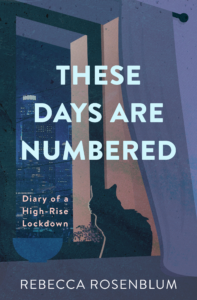 Buy the book: