
January 14th, 2020
On calling myself a writer
There’s plenty of posts and articles and little essays out there with titles similar to this one and for years I was a bit dismissive of them. They are usually written by folks at the beginning of their writing careers with little or perhaps nothing published, wondering when they will earn the title. My dismissal comes from my assumption that the title is irrelevant–writers write, so write. People will call you what they call you, or not. What you do matters more than what you’re called.
Which remains true. And yet…
I realized recently, I don’t think I’ve actually ever introduced myself as a writer, really. I’m either at an event where everyone’s a writer or everyone knows I’m a writer–a festival, a reading, a writing group–or I’m at work or a work-related event, where I’m known by a completely different title and writing rarely comes up even if some of my coworkers are also aware of the writing thing, or I’m out with friends and I let them introduce me as they will. If no one introduces me, I actually usually default to just my job as what I “do.” I don’t default to writing because…well, if I’m honest it’s because I don’t make a living at it. A few times recently, someone else has presented me as a writer that first inevitably led to questions about how I structure my days, which is around my job, which is disappointing to an interlocutor who maybe was just imagining me writing glorious fictions all day. Or so I imagine. So I just don’t start it.
Is this really sad, for someone with three books and some modest success? Very very occasionally–but more often lately–I’m not at work or a writing event, and there’s no friend or acquaintance to introduce me. For all anyone knows, I’m an accountant or a seamstress or a mob enforcer, and though honestly it’s rare that anyone’s really shown any curiosity about me at all, at some point there’s going to be awkward small talk and someone will ask me what I do and then what will I say?
Nothing. Anything. It doesn’t matter. Mob enforcer. It remains as true as it always was that what I do is more important than what I call myself but it does seem odd and somewhat disappointing that so far down the line into a career that’s beyond my wildest dreams I still don’t feel comfortable presenting it to strangers.
You know, I wanted to write this as a piece of introspection, a way of exploring what flaw in me keeps me from feeling comfortable with this aspect of myself but 463 words in, I have come to a surprising conclusion: this is other people’s faults! I didn’t expect to end up here, but here we are: it can very unpleasant to tell other people I write books. There is, per above, the expectation that if I were a real writer, I would be writing those books between 9-5 Monday to Friday and I’m not doing that, so I can’t, like, prove I’m the real deal or anything.
No, I can. But social norms seem to indicate I should shrug and let my fellow party guests assume I self-published some sort of illustrated diary about my cats instead of just getting out my phone to google the glowing reviews in national papers or the author page on a major publisher’s website or the award nom. Because that sounds monstrous, right? And besides, no one asks that of dentists. If you tell me at a party you have a dental practice uptown, I don’t assume you’re deluded and ask leading questions about your licensing exam. And honestly, if you were still in dental school and studying and working towards eventual success but not quite there yet, what business would it be of mine?
So yeah, I’m a writer, but sometimes people are mean to writers so if you seem like you might be mean to me I won’t tell you. I will tell you I am a production project manager, which I also am, but no one knows what that is, so for some reason, it sounds truer.
I started writing this piece feeling a bit bad about being such a meek little flower, but it turns out I have WELL-FOUNDED FEARS. So there, world!
PS–I wrote this post about a year and a half ago but somehow things lurk in my drafts folder and never get posted. Since I wrote it, I have largely stopped telling new people about the writing, and since I’m not publishing at all lately, they mainly don’t find out. It’s great! A good decision–really frees me up from a lot of bad feelings and awkwardness! Although, one time, a newish acquaintance whom I quite like asked me a lot of questions about my life and I did tell her–she seemed so genuinely interested–and she was overwhelmed with glee. It was actually moving, how happy she was for me that I’d achieved this thing. The next time I saw her, she’d ordered one of my books from the library. Honestly, I completely understand why that’s not the usual reaction but it is so nice that it happens once in a while.

November 21st, 2018
More ways to feel bad about being a writer
Sorry about this, guys. I’m not even in a particularly dark place right now (I went to a chocolate-making class last night, actually). That last post was a long time coming, and just happened to get posted recently, and then all these other on-theme things came up in quick succession. So here ya go…
1) The movie Can You Ever Forgive Me? is a true story about an author named Lee Israel in the 1990s. Her books fell out of favour and she couldn’t get a book contract and had trouble holding onto a day job, so through a series of accidents she turned to forging letters of famous dead writers and selling them to collectors. The ins and outs of the scam are interesting, but Lee’s living situation and desperation are incredibly sad. I saw it with Mark, so as two writers we kind of moped out of the theatre. I’d still recommend the movie. It’s well-written, though I bet the book it is based on, by Israel herself, is better–there’s some plot holes in the film. As well, I really like Melissa McCarthy, who plays Israel. It’s nice to see her in a dramatic role for once, albeit one where she makes a lot of dark jokes. It also has the guy who plays Kevin on *Brooklyn 99* in it in a tiny role. Kevin is my favourite!
2) On the flight back from Poland I saw the movie Love Simon pretty much at random, and while I probably wouldn’t have watched it in any other context, I quite liked it. It’s about a gay teenager struggling to come out while hanging out with his really attractive friends and going to fun parties. But that’s not what I’m talking about. I could sort of tell by the language of the good but glittery-Hollywood film that it must be based on a book and sure enough, it was–I got Simon versus the Homo Sapiens Agenda by Becky Albertalli out of the library and read it over the weekend. I was pleased that the book had more going on and was a bit more subtle, and interested that the book developed different characters in different ways–if anyone wants to do a compare/contract of the two with me, HMU!! But the thing that makes me sad is after all this, I went to Albertalli’s website to see what else she’d written and read her deeply disturbing FAQ. Though perhaps I’ve dreamed of having legions of loving fans, I never thought really really famous writers have to write FAQs like “Would you consider being my therapist?” “I’m feeling depressed and having thoughts of suicide.” “Can you send me your book for free? etc., etc. She sounds like a really nice person and like she’s coping really well, but wow.
3) The The Diminishing Returns report from the Writers Union on writers’ incomes. I’m linking directly to the report so you can see the stats for yourself, though there have been articles in most of the major papers on this thing. In general I think that the conclusions the report draws are true–writers’ incomes are definitely going down, it’s at least partly due to poor copyright protections though I think there are many other trends in play that are harder to quantify or act against, but it all sucks for us writers. I’m sad about all of it. I also want to say that the Writers Union is an organization I most of the time respect and am myself a member of. However…this isn’t a great report when you get right into the math. I wrote up a whole analysis of it but in the end I’m not going to post it because a) what do I and my one statistics course know? b) the truth is, even with variant math I don’t think the conclusions would differ, and c) I don’t want to undermine the central concerns of writers with distractions that don’t really matter. But still, bad argumentation of any stripe makes me shudder. Again if you want to get into it with me privately, always delighted to chat!
Hmm, sorry for all the sadness! In an attempt to cheer things up, I can report that the youth are doing well, at least the youth that I’ve encountered: I visited a writing class at UTSC last week and the students were really fab–I was really impressed with their engagement and insightful questions. I’m also still working with my own lone student, whose work is really fascinating.
Oh, here’s another nice thing–I was telling a friend about reading through a publication and encountering my own work and just reading that too. She was surprised, as she thought maybe I would find reading my published fiction squirmy or embarrassing, in that way you feel when you see yourself in video sometimes. “Nope,” I said, startled at my own answer. “I like my own work. I don’t publish anything I don’t like.” Of course, I do find errors or things I’d like to change sometimes, particularly in older pieces, and sometimes I get tired of excerpts I’ve read many times in a row, but in general I subscribe to Sarah Selecky’s famous “Write what you want to read” and I do. I often tell just-starting writers that there are no guarantees that anyone will ever like your work, so you’d better like it a lot yourself or the whole exercise will be pointless. If you write something you love, then it has value no matter what.
And thank goodness, considering all that other stuff.
November 16th, 2018
Indignities
This is a post about indignities I have suffered in my life as a professional writer. I have been keeping this post going for a while, adding to it occasionally, then going back and deleting or mitigating stuff, forever adding to the header apology to the tune of I KNOW I’m privileged, ok? I know I’m lucky to have my work even considered worth reading by anyone at all, to have my voice heard in any space, and that there are so many who don’t get that opportunity. To complain, as a writer, about being treated rudely, about being occasionally silenced or ignored, when I am so often treated with generosity and listened to thoughtfully, is that just whiny jerkdom?
Yes. But if I acknowledge that I am sometimes whiny, can the world also acknowledge that people shouldn’t be rude to me, or waste my time, or aggressively push me to work for no money? I’m going to say all of the above is true, and until the world pays up on its side of the bargain, I’m very very very occasionally going to whine.
1) Once I wrote a piece for a journal that then emailed to ask me for my SIN so they could send payment. I know very well that there is no reason anyone needs a SIN to pay me but to keep the piece I called to give it. When I called the number it turned out to be some dude’s cell # and he was surprised to hear from me. I told him my SIN, which I assume he wrote on his hand. A few months later I got an email accusing me of having not provided my SIN–the email didn’t even entertain the notion that the publication could have lost it. This time I just emailed it because I didn’t want to talk to that guy again. All told it was a year before I got paid. The amount? $25.
2) Several times I’ve been on festival panels or included in other events with authors I was really excited to meet. I had read their books and genuinely admired them. Some of these folks have been extremely gracious and lovely and generous but some of them have shut me down COLD. The impression I have gotten was that they were saving all their energy for their fans in the audience, but I thought it was funny that it never occurred to them that they could have fans among their fellow authors too. I also thought it might be nice to be gracious to be even people who aren’t your fans.
3) There was a period where I was earning freelance money above the threshold for charging GST (this was before HST) so I had a business number and a separate tax account and had to charge GST on all my freelance work–this is the law. One journal told me they “didn’t have budget” for taxes and simply didn’t pay it. Many other journals seemed baffled that GST even existed for creative work–I guess not a lot of creative writers earn above the threshold (most of my freelance income came from other areas)–but only one flat-out refused to pay it. Imagine trying that in a store! I had to pay it out of my own pocket, of course.
4) I once showed up for an in-person interview when I was travelling on a tight schedule for readings. When I got into the journalist’s office, he announced, “I didn’t read your book, but I wanted to give you a chance at the coverage anyway.” Basically, he was giving me the opportunity to talk awkwardly about my work with no questions while a stranger stared me. Lucky duck.
5) More than once, someone has agreed on my behalf that I’ll do readings or to do guest writing or similar things without telling me until a few days before. These things never involved payment, of course, and I couldn’t get out of them without embarrassing all involved. I did them. I was very tired.
6) A friend of an acquaintance once asked me to blurb his book because he already had some male blurbers and needed a woman to balance them out. He told me he hadn’t read my work but his friend told him it was good. I passed.
7) Someone once took the time to write me an email about how bad my book was based solely on the text on the Amazon buy page. The email was longer than said text. A good friend had to talk me out of writing back to tell him how stupid this was.
8) A literary festival I was invited to read at once couldn’t (or wouldn’t, I now wonder) order my books for their on-site bookstore. They told me I could bring books to the festival and the bookstore would sell them on consignment, but when I got there it was clear that the bookstore staff was not set up to keep consignment money separate–if they sold any of my books, they were going to keep the money or it was going to be a giant mess. To make a reasonable stack in the display took 5-6 books–so more than $100, a lot of money to me then (ok, and now) so I chose to just keep the books in my backpack and if anyone wanted one they could buy them directly from me. One woman did ask me, after my event, where she could by my book. I started to take one out of my bag for her and she *backed away*. This one is a sort of 2-for-1 indignity.
9) I once contributed work to anthology for free because I was told the anthology was being sold for charity. Later I got an email announcing the launch party that said explicitly that those contributors on that email couldn’t come, because the venue was small and other more fabulous contributors like x, y, and z were coming, and we could see what a bind they were in! I did not dispute that x, y, and z were much more fabulous than I, but was aware that there are a) bigger venues and b) nicer ways to word that email.
10) So many times, someone has come to one of my readings (often very late–I can see you!) and then, in the Q&A, asked a question about their own self as if the event had not taken place.
11) When I was teaching creative writing in high schools, my students refused to learn my name and always addressed me as “Miss.” I told them they were welcome to call me Ms. Rosenblum or Rebecca, I told them I didn’t identify by my marital status, I told them it’s disrespectful to call someone a name they don’t identify by–no dice. Even the good students that seemed to like me–Miss. It made me feel like a scullery maid.
12) Every time someone who has ever promised to pay me by x date and then when I enquired at x + 2 weeks why I hadn’t been paid, acted like I was being kind of grabby or like it was weird that just because they said that date, that I would have counted on it as a fact??
13) The several times I’ve mentioned to a male writer I just met that I liked his work. They engaged immediately, asked follow-up questions, and seemed very friendly. As soon as I had run out of praise and thought to move on to another topic of literary conversation, the fellows saw someone over my shoulder they had to talk to asap. I’ve learned–don’t lead with flattery, even if it’s true. See if the writer can act like a person first. Also sorry: it’s not all dudes, but it’s always dudes.
14) The time I got left at the train station going to a festival, the time I got locked out of an event space, and especially the time the event space double-booked AND THE ORGANIZERS MADE US GO AHEAD ANYWAY.
15) Solicited submissions rejected by form letter or silence. Obvs, I’m not expecting an automatic yes, but if we’re colleagues enough that you can hit me up personally for work, you can also reject it personally.
16) Doing a commissioned piece AND all the editorial work before being told a person I didn’t even know was involved in the process had rejected it. When I tried to end the relationship on a cordial note despite some decidedly uncordial feelings, I of course received silence. Grr.
17) The time I was shortlisted for a prize and told a) I could not come to the prize announcement because there wasn’t enough room and b) only the winner would be notified–they didn’t even want to email me a second time to tell me who won if it wasn’t me. I found out who won by googling it, eventually.
18) Once an editor got in touch to ask me if I would be interviewed for a journal. When I agreed, he said an interviewer would be in touch. What I got was a note saying in order to make this a “collaborative” process, I should come with some questions and then answer them.
19) All the times the stage for readers has been to high to step onto wearing a skirt.
20) The time there was a chocolate fountain at a formal event for writers. Nope. That was mean.
June 17th, 2018
Trillium Preparations
The Trillium Readings are on Wednesday evening at 6:30 and the awards are announced and Thursday evening and I am a bundle of nerves and excitement (also sweat, but that’s the weather and not the Trilliums per se). Would you like to know what I have been doing to get ready? Well great, here you go:
1) Reading all the books! This was my first order of business as soon as the shortlist was announced, and indeed I was concerned about reading the five other nominees for the book prize in the time between then and the winner announcement (May 24 to June 21). But in the end it was so easy because the books were SO GOOD! I read the other nominees for a few reasons–in order to be able to make the most of the opportunity to chat with the other authors about their work when we meet at the events, in order to appreciate the nomination of my own work a bit more (someone thought MY book was in THIS category), and just because when someone brings good books to my attention, why not read them? I’ve read all five now and can say you won’t be sorry if you do too! I can sincerely recommend This Accident of Being Lost by Leanne Betasamosake Simpson, Birds Art Life by Kyo Maclear, The Marrow Thieves by Cherie Dimaline, Life on the Ground Floor by Dr. James Maskalyk, and Scarborough by Catherine Hernandez. I was simply blown away, and in such various ways and means! I don’t think I’ll finish the poetry books by the awards night but I’ve gotten started and it’s similarly staggering. Sadly, my abilities will not allow me to attempt the French lists.
2) Press! There was a short piece about me in The Hamilton Spectator when the short-list was announced, which was huge for me since they have never covered any of the work I’ve done as an adult (I had a story in there as a kid, though!) There as also a piece in the super-local Glanbrook Gazette–because of these two articles, I’ve been getting some nice notes from some of the back-home folks. Now Magazine also has a mini-site about all the Trillium nominees, which includes a short text interview with each of us including me. We’ll all each have a video interview posted as well–I had fun shooting mine, but I’m still scared of what it’ll be like to watch it.
3) Buying a new dress! Oh, wait, I haven’t actually done this, even though a lovely friend offered to go with me–and with three days left, I probably won’t. What I did instead was allocate myself fifteen minutes before I had to be somewhere else to run into The Bay with a hole in my stockings, sprinting past really nice dresses thinking, if I were more organized I could go try those on. Then I bought a new pair of stockings and threw the ruined ones in the garbage in the Bay changing room BUT I also bought an extra pair for Trillium night. Those have polka dots, which will hopefully distract from the fact that I will be a) wearing a dress of my mother’s from the 1980s b) wearing a dress from the grocery store.
4) Hoarding pills! Bet you didn’t see this one coming! It actually accounts for some of the disorganization in #3. I have my migraines under better control lately owing to good medication, which is why I haven’t pain-vomited in over a year (hooray!) BUT there are limits on how much of this stuff you can take in a month–I’m not sure what happens if you go over, a very slow-motion overdose, I guess. And June has been a terrible month for migraines, mainly due to weather but partly due to travel, stress, poor-decision-making on my part, and just some bad luck. So I’m down to two days worth of my strongest pills to last the rest of June (it is, please note, June 17 as I type this). The pharmacy will sometimes give you something a couple days early, but not a couple weeks. So, with two days worth of super-pills and two days worth of Trillium events, and with the potential for migraines at their worst to induce pain-vomiting, I am jealously guarding my pills like a…I’m sorry, what are those fictional characters who hoard gold under a bridge? Those. If you have had a weird conversation with me lately or I seemed on the verge of tears for no reason, I was probably way under-medicated and I’m sorry. Probably July will be better.
5) Enjoyment. I have to say, I have really liked being on the Trillium shortlist and if I could just drag this out forever and not find out the winner, I would do that. I feel pretty confident (and happy) that So Much Love won’t win–there’s so much brilliance on the shortlist, I’d be delighted for any winner at all. But this has been very fun and I’ll be sad to see it end. Open secret: I’m going to write an acceptance speech. I have never written one before when I’ve been short-listed for other things. I always thought it was presumptuous, like saying you think you’ll win, and also something of a jinx. But I haven’t won the other things I’ve been shortlisted for and I didn’t expect to, but I think it’d be fun to write the speech. So I will, and never give it but I will have had the pleasure of writing it. And pleasure is what this experience has been, so why not drag out a little extra? I am a lucky lucky kid.
January 24th, 2018
Many things are terrible/1000 things we like is back
It probably just proves that I’m a self-absorbed jerk, but I feel a bit self-conscious about the fact that you can’t really tell from any of my social media that I realize that large swathes of the Canadian literature community seem to be self-immolating. If you care what I think–and probably no one does–I do realize. Boy, do I.
I’ve been pretty entrenched in following every new horrifying reveal and all of the ensuing bickering/battling over the details. I’m reeling for my colleagues who have been hurt and were still brave enough to come forward–sometimes more than once–to try to protect those who could be next, or just to get their stories known. I’m so sorry I didn’t know more years ago–though I knew a little. Mainly I have been very very lucky in most of my literary life. So lucky.
If you have no idea what I’m talking about, that’s fine–it’s very depressing. And if you know exactly what I’m talking about and feel I’m not doing it justice, I’m sorry, and I know. I’m just not really equal to this sort of thing, especially when tides and tempers have been so mercurial lately. I’ll be running around the house muttering that I’m really going to tell X what I really think and Mark–who is also upset but more measured–will suggest that that’s not the best path, and then the next morning more of the story will emerge and everything is different and I’m glad I didn’t say anything. That has happened enough times that I think I’m never going to say anything ever again. I’m spending more of my time miserably scrolling through more and more sadness, wondering what to make of any of it.
And yet one must go on–and one must write, in this increasingly fractured and strange environment. Surely it won’t always be this intense, but I can never unknow what I know now and…oh no. So…I do what I can. One thing will be a re-foray back into 1000 things we like, which for the first time in it’s 15 year history, we didn’t come close to finishing in its allotted year. But as has been mentioned in this space, 2017 was a toughie for different reasons. So I’m giving myself a pass on that and myriad other things, and just trying to do more and better in 2018. Here are some of the ways I’ve been trying to buck up, cheer up, or just get up in the morning throughout the maelstrom of awfulness so far this year:
455. The The Toronto Women’s March was on Saturday and it was an inspiration and a motivation and a joy to hear the speakers, chant the chants and walk the walk with so many female-identified humans and our allies for the right to imagine own our future. And added bonus was that my mom marched with me this year, which was really wonderful.
456. Doctors without Borders Canada never ceases to inspire and amaze with what they do. I just called them to iron out a problem with my monthly donations and it made me feel a little better about everything.
457. Cookies! I’ve been bringing them to any friend who seems to need a bit of good cheer of late, because honestly cookie-baking is one of the few concrete skills I have in my arsenal. A lot of people like my baking and even if it turns out the recipient doesn’t, I hope they feel loved that I made them something. Also, I like doing it.
458. WhatsApp–I couldn’t even tell you why, but sometimes it’s really the medium that makes the messages work. Over the past year, I got into WhatsApp groups with both a gang of my university friends and (separately) a gang of my elementary/high school friends. Both groups are delightful! Why WhatsApp, when email threads and Facebook messenger and who knows what else didn’t work for either set? No idea and I don’t care–I’m just so happy to have messages from some of my favourite people, all the time!
459. Ballet classes–they are hard, but I really do like them. Grand battement is my favourite.
460. Giving away my stuff. I said in my new year’s resolution that I was going to sort through my stuff and get rid of what I do not need, but it’s hard when everything has a story or a memory attached. Then there was that awful cold snap and a colleague said her church was running a soup kitchen and they wanted to outfit those who came with warm clothes and blankets if they could get enough donations. I went right home and packed up all my extra scarves and hats and fleece blankets–Mark gave a bunch too. Even if someone did make them for me years ago, I’m sure they wanted them to go to someone who really needed them.
461. A couple fleece blankets for myself.
462. Liking and retweeting/sharing. I haven’t completely disappeared from social media–I still like and share material, even though I’m not generating much myself. I’m not sure how much the so-called “signal boost” helps, but if it does, I’m happy to do it. Also, likes help the writer, or at least that has been my experience for sure–it does feel good and give confidence when you get a bunch of stars or thumbs-ups or hearts. You feel like your message is getting through. So I’m trying to let anyone whose voice resonates with me know that. I think I might have been a little parsimonious with the likes before, just out of thoughtlessness–“I enjoyed that essay/post/photo, what’s next?” I’m trying to do this tiny thing very intentionally.
463. Reading books. I mean, that’s the heart of everything, right? Otherwise, why bother? Currently I’m reading The Making Room Anthology under a fleece blanket, and hoping for better, warmer days.
October 2nd, 2017
How to fly with a sinus infection without your face exploding
**Warning: this entire post is about my health—whiny, dull, and, in places, disgusting.**
I wrote last week about my glorious adventure in New Brunswick, but I wanted to keep the medical aspects of the trip for a separate post, lest they take over. For in truth, I was rather sick for the events I described. Not as sick as I have been this summer–for truly, this was the summer of illness for me. I started feeling vaguely unwell at the end of July, andwas truly ill for the second half of August and most of September. Starting late last week, I’ve been basically fine for the first time in several months, but not counting any damn chickens.
So in the second week of September, I had a sinus infection plus assorted other things, and was freaking out because I didn’t seem to be getting better past enough to fly in ten days. In case you don’t know, if you fly when your sinuses are too congested you run the risk of the pressure not adjusting properly in your ears (the “pop”) and if it gets too intense and you don’t/can’t take appropriate measures, the eardrum can rupture, which is not the worst thing that can happen to a person but causes you to bleed from your ear and possibly lose your hearing and is pretty bad. The reasons babies cry so hysterically on planes (well, one reason) is that they don’t know how to swallow to adjust the pressure in their ears and they are feeling it really strongly–unadjusted pressure hurts a lot, even if you are well and uncongested. So you can imagine (or I can) what a rupturing might feel like.
I was very worried about this. Not so much the pain, and the possibility of permanent hearing loss, though I was afraid of those things very much, but: here I am getting this amazing professional opportunity and I might have to walk off the plane and introduce myself to Ian LeTourneau, who has been very kind to me via email but whom I’ve never met, and say I have ruptured my eardrum, please take me to the hospital.
So, five days before my flight, a Sunday of course, I panicked and spent two hours in a walkin clinic to get antibiotics. I had tried to get an appointment with my own doctor the previous week, but she was too busy. All my other sinus infections have gone away on my own, but this one didn’t seem to be, and I didn’t have time to see how it panned out. So I start taking the antibiotics, in concert with decongestants, a steroidal nasal spray, a neti pot, and a nasal mister and lo and behold: the day before the flight, the mucus had gone from yellow to clear (yuck!) signalling that the antibiotics had worked but here’s the thing–other than the colour, nothing had really changed. I still *felt* like I had a sinus infection, even if I was no longer technically infected. And there was still plenty of fluid in the exact wrong spot–inside my face, where it could burst out an eardrum at an inopportune moment–even if it was the right colour.
So I read everything the internet said about whether my eardrum was going to burst, which was surprisingly inconclusive. Basically they said, don’t fly if you can avoid it, which was unhelpful–who flies for no reason? The tickets you can change cost twice as much!! But they didn’t say what is the difference between the people who have a sinus infection and fly and go deaf in one ear, and the people who have a sinus infection and fly and are fine. I got the feeling that maybe some people are just more organized and prepared, and also perhaps luckier?? Anyway, in an attempt to put myself in the lucky category, here’s what I did:
1) Keep on the decongestants all day and all night before the flight, and take the max dose half an hour before the flight. I thought these pills just made me feel better superficially by numbing the pain but apparently they actually shrink swollen tissue, making it easier for horrible fluids to escape from the appropriate holes and not have to create new ones.
2) Spend the previous day in a room with a humidifier, plus regular use of nasal mister. This is to thin said horrible fluids, also in aid of their easy and painless escape from my face.
3) Stay super-hydrated before the flight, again with a fluid-thinning agenda. There are also actual mucus-thinning drugs, but I was scared to put yet another unfamiliar chemical into my body right before the flight.
4) Nasal irrigation–only at home and in the hotel of course, because that’s a big project and there are limits to what even I will do in an airport bathroom. This is to evacuate horrible fluids before they attempt to escape on their own.
5) A shot of Dristan right before the flight. The doctor told me I might need to take this *after* the flight, if my ears were plugged but not exploded, but an American website told me to take a different nose-drug before the flight, and that drug doesn’t seem to exist in Canada, so I just took the Dristan. I also forget what this is for. I think it’s another tissue-shrinker.
6) Chew gum on the plane for takeoff and landing but also have two bottles of water, one for each, because gum cannot generate enough spit for all the swallows all the time. Swallow constantly. It feels odd (and probably looks odd) but does help.
7) Earplanes are a pressure-regulating earplug and I half-wonder if I could have just used these and not gotten up to all the other shenanigans above. You put them on while still at normal pressure (on the ground, ideally before the plane door has shut) and you can take them out when you are at full altitude and put them back for descent, or if you are paranoid like me leave them in for the whole flight, taking them out again, after the doors have opened. They worked really well for me, adjusting pressure more slowly and gently than it would have otherwise, though it still hurt.
So basically I had a mildly painful and highly anxious flight to Fredericton, but emerged from the plane feeling like I had WON THE LOTTERY. The great thing about assuming the worst is that everything else feels like the best! The fact that no eardrums burst and I could resume normal functioning as soon as I hit the ground, and go do all the nice things I had planned around the festival was solid gold. I hope these tips might help other people have as glorious an experience of non-eardrum-bursting as I did!
January 22nd, 2017
Now in book news
So Much Love is still 7 weeks and 2 days from being available, but little things are happening and it is all very exciting/unnerving. Like
–if you would like to win a copy, you can enter to do so on Goodreads. There’s 50 (!) copies available and the contest closes on February 16. Good luck!
–if you would like to know more about the writing process/me writing in general, you could read my interview with Koom Kankesan at Open Book. Koom and I went to school together in 1999 (!) and have stayed in touch since, and both published books. It’s been a wild ride!
–if you want to read a list of amazing upcoming books that includes mine, you could read 49th Shelf’s Spring Fiction Preview. There is so much goodness upcoming (my husband Mark Sampson also has a book on the list called The Slip. It is very good!)
Onwards!
January 3rd, 2017
A tiny bit of buzz!
While I wait patiently for the 1000 things to come rolling in (hint!) I can tell you about the tiny bits of buzz that are floating around regarding So Much Love, a novel that will be out and available in actual stores to actual readers in just over two months. Terrifying.
I mean great, very exciting, it is just that I am a little nervous. Anyway! There is a print review in the most recent issue (winter) of Maisonneuve, which I subscribe to and was reading on the treadmill when all of the sudden, there was my book cover! I was NOT expecting that three months before publication. It’s just a couple hundred words and mainly summary–I’ve squinted at it for a long time and can’t be certain if the reviewer liked it or not but it is still very nice to be mentioned! The review isn’t online, but if you read it in print, please let me know what you think.
Also! I did a short interview with the wondrous Kerry Clare, with whom I’d be happy to chat for no reason, but this was actually for a little piece in University of Toronto Magazine, which is lovely.
And that, at two months and 11 days to publication, is what’s going on. Kind of lovely, really!
February 3rd, 2016
Name games
I have very strong feelings about names, but they are hard to quickly and easily define to people. It’s not that I don’t have rules, it’s just that those rules are not often comprehensible to others. Also, what does it matter? It matters that I am writing a novel with a lot of names in it, so how much sense the names make could potentially drive a reader nuts.
You get a name at birth and that is always your name–unless you change your name, but that strikes me as incredibly mind-boggling. I mean do it if that’s your jam, I don’t think it’s wrong or bad to change your name, I just don’t understand how anyone copes with, for a certain number of years being one name, and then later another.
This bafflement on my part is in turn baffling to others who know me well, because for the first 27 years of my life I went by “Becky” and then switched over to “Rebecca” after that. To me it makes sense because my name was actually always Rebecca, Becky just being a nickname for Rebecca. It was just that no one called me that–parents, other family, high-school, university friends, teachers, everyone called me Becky but I knew myself to be Becky or Rebecca interchangably and I did not find it a major switch to start introducing myself formally as Rebecca. I felt I was old enough to carry the three syllables, and I wanted less dissonance between my written and spoken worlds (I have almost always written under Rebecca). Many people could. not. deal with this change, and that also makes sense to me–see below–so I stopped asking family and friends who had known me prior to age 27 to call me Rebecca. So now all those folks know me as Becky, and everyone I’ve met since–grad-school friends, work friends, people in the writing community, and notably my husband and everyone he’s introduced me to–call me Rebecca. This makes perfect sense to me, no confusion at all, the way you wouldn’t be confused if someone pointed at a piece of furniture you call the couch and said, “Want to sit on the sofa?” Rebecca and Becky are synonyms, synonyms for me.
I am extremely respectful about given names and nicknames, and I am always careful to call someone exactly what they introduce themselves as. I would never presume the privilege of using a nickname, even though I love nicknames, unless I were invited to do so. This also causes some confusion, as the various Jennifers I work with are all occasionally referred to as Jen. I never did that, because I wasn’t invited to–I wouldn’t be happy if someone went rogue and called me, say, Bek–and they all thought it was weird. The Jennifers actually got together and asked me to start using Jen, which is also weird but I feel more comfortable doing so now. Basically, I guess I think, one’s name is one’s own–nicknames are at the owner’s discretion.
Although if you ask me to call you by a nickname, or ask me to GIVE you a nickname, I will be very happy to oblige. Something that makes me happy is that way back in the 90s, my friend Karen complained that she didn’t like any of the nicknames available to Karens, and I thought for a while and suggested “(W)ren”–the second half of her name, and also she is small and birdlike. She still uses it! I got the same complaint from an old workmate named Taylor and suggested Lori, which she liked but I don’t know if she still uses.
So, I’m down with nicknames. HOWEVER, it blows my mind when someone changes their name to a completely other thing that has no relationship to the original name. How I see these two categories of change as so different I have no idea, but there you have it! Seriously, when people change their names at marriage (the reason most of those I know who have changed it did so) it takes me YEARS to get it straight. There are people who have been married over a decade that I refer to occasionally by their maiden names (is sexist terminology? I feel like yes.) I mean no disrespect, I’m onboard with the idea of the name-change, it’s just that I can’t process it properly.
One of the great things about being a writer of fiction is that I have access to and control over tonnes of names–which is good, because my husband would never let me have enough cats to use all the names I like. I don’t have a science to how I name characters, though if you read a bunch of my work you can notice certain preference areas. I once got a baby name book with the idea that I would read through it and find new kinds of names for my characters but that did not pan out at all. Usually I just think about a character until a good name pops into my head and that’s that. I almost never change a character’s name once I’ve decided on it, which is why in my last book there’s a not-so-great fellow with the same name as my husband. Sorry, Mark-the-husband, Mark-the-character showed up first and I just couldn’t unname him.
And while I’m listing my naming oddities, I should mention that I can’t use generic terms of endearment–my husband and I call each other by the names on our birth certificates. I can’t explain this anymore than I can the rest of it–maybe it has something to do with how if anyone can be “baby” or “sweetie” than perhaps no one is? And this rule does not extend to the cats, to whom I regularly refer as “sugar plums.”
I also do weird things with nicknames in fiction–many’s the editor who has come back to me with a “correction” that a character is flipflopping between or among names. In truth, it’s that someone could be referred to by different nicknames by different people, but that’s a pretty hollow truth if no one understands and just thinks the story is sloppy. So I wind up changing it–in my forthcoming book, Julianna is almost exclusively called that, and I took out most of the use of Juli and Jules. This is sad to me, but it is important not to baffle the reader with my personal quirks.
Similarly, my editor pointed out that two characters have very similar names and readers might get confused–could one change? My instinct was “absolutely not.” It’s one thing to use a nickname or not and it’s another to give someone a name he never had before!!! Despite the fact that it’s an easy change to a minor character, I am a fragile point with the manuscript and I honestly didn’t think I could look at it with the wrong name in there.
I was being, as you’ve no doubt been thinking, an asshole, so instead of stating the above, I said I was going to leave the old (right!) name in place until the last minute before I hand off the manuscript–then I’ll do a global search-and-replace with a new, yet-to-be-determined name, and send off the ms without looking at it again. Which is clearly a batshit thing to do, but shouldn’t inconvenience anyone but possibly me, which is fine.
Next time you think an artistic type person is being eccentric just for the sake of it, please rest assure, I’m annoyed by me as anyone else. But I’ve had this quirk all my life and at the end of an exhausting edit is just not the time to rehabilitate it. So on we go–
Love,
Rebecca (Becky)
December 27th, 2015
For 2016
I hope everyone had a very merry everything this holiday season, and continues to do so. Mine has been and hopefully will continue being wonderful, but I’m not sure a recap of the nice things I’ve been doing, seeing, and eating would be that interesting. Instead, I’m in the mood to look forward to 2016. 2015 was a pleasant year in many ways, and certainly nothing really bad happened to me personally, but I found it to be a challenging 365 days in large and small ways. So I’m anxious to get on to the new one, which, like an unwritten book, has not had anything go wrong in it yet. Here are some things I resolve to do to keep making 2016 a good year even once it has gotten started.
- Finish novel–really finish, not like the other times I’ve resolved this when it was “finish a draft” or “finish submission draft.” This time it is “finish and submit to copyedit” finish–world without end finish. Not included in 2016 goals only because it’ll be happening in January 2017 is “publish novel.”
- Clean out spice cupboard. Find a way to store spices that is not a giant mess for first time in life. Cannot be that hard.
- Wear every piece of jewellery I own at least once, out in public. This is an adapted version of KonMari, I guess. I got a new jewellery box for Christmas and in transferring everything over from the old one, found I had a tonne of stuff I never wear and indeed have forgotten about. I’m inclined to keep it all because most of it was gifts, but if I find I can’t even get through a single public appearance with the item due to physical discomfort or embarrassment at the item’s inappropriateness for my look, I think I’ll have an easier time parting with it.
- No eating after dinner is over.
- Stop being so fussed about what people I might never see again think of me. Focus on being a better friend to people who are genuine friends.
- Start new novel. Have clearer structure and better plan than first novel from the get-go, so this one does not turn into another six-year ordeal.
- Experiment with only one social outing per week for month of January. See if it makes me more productive and happier, or insane.
- Use migraine tracker properly, or else find better migraine tracker.
- Complete marathon critical essay and edit into something publishable. Essay is currently less than a third finished, 10 000 words long, and largely about my personal issues.
- Train cat to ring bell on command.
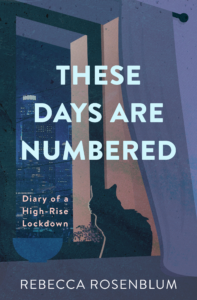 Buy the book: