
April 20th, 2016
A library memory
Mark got me a new jewellery box for Christmas and so I cleared out the old one. I trashed the stuff that is legitimately useless (broken necklaces, single earrings) and gave anything I knew I would never wear again to my local 6-year-old (who was thrilled! 6 year olds are the best!) I found a bunch of badly tarnished silver stuff I hadn’t worn in years, went on a quest for silver polish (oddly hard to find–surely silver jewellery hasn’t gone out of fashion) and polished it all up. This process took months, but finally my setup is all worked out and I have access to a lot of pretty things I’d forgotten I owned.
Today I’m wearing a silver necklace that took me forever to polish because it has square links–it’s hard to get around the corners–but that’s also what makes it an interesting-looking piece. When I put it on, I realized I’ve had it for almost thirty years! Like most stories from my childhood, this one is weirder and sweeter than I knew at the time…
I went to a strange country school where there were only a few kids in each grade–usually between 7 and 9 in mine. Me and two girls named Jenny were the central girl population, with other girls coming for a year or two before moving away (why was the population of my little town so transient, I wonder now). With such a small group and my nerdish nature, it was easy to find myself without friends for a time, which is where I was in grade 4. Like I say, it was a tiny country school so no one was particularly mean to me most of the time, and I still got to play in any game that required quorum. Those games were often pretty rough, though–things like British Bulldog and Red Rover–and with my tendency to fall down even when nothing roughhouse-y was going on, I tended to want to stay away, even though I would have liked to play with other kids (note: I had friends and did fun outdoor stuff other years; grade 4 was just a rough one).
So I got really into being a “library helper” in my school library. I had done it for at least a year prior to grade 4–you just put books other kids had returned away during recess. I wish I could say I did it due to my intense love of reading, and I certainly liked all the books, many of which I would read or skim as I put them away, but mainly I was just looking to avoid recess.
That was the year the teacher-librarian, Mrs. Palubski, fell down a flight of stairs (at home; our school didn’t have stairs) and broke her ankle. Now that I think about it, something else must have been wrong with Mrs. P beyond a broken ankle, because she fell in the fall and took of the entire rest of the school year, but I didn’t know at the time that that was odd.
For a while we had a string of temporary subs come into the library for just a day or two at a time. Because any teacher could sub in for a teacher-librarian, often they knew nothing about libraries, so when I came in I would tell them about the Dewey Decimal system, which had become my favourite thing about the library, better even than the books or lack of other kids. It was just so orderly, and order was something I felt was sorely lacking at school, especially at yelling, pushing, red-rovering recess. I can still find things via the Decimal system, even though the libraries I’ve gone to in the past 20 years have almost all been Library of Congress style. 636 is my favourite, domestic animals (ok, I just looked it up–animal husbandry, but close enough!)
I’m sure I was an officious little dweeb, but I think the subs humoured me, partly because they realized this was the main thing going on in my life at school and partly because I actually did a fair amount of work that they, in turn, did not have to do. It was a good system.
I just remembered that maybe Mrs. Palubski was pregnant, which could be why a fall down a flight of stairs was such a problem. Or maybe it was just that by the time her ankle healed, it was time for mat leave. This wasn’t really on my priority list at the time–sorry, Mrs. P. I hope everything worked out ok for you!
Anyway, when it became clear that Mrs. P was not coming back, we got a long-term substitute for the rest of the year: Mrs. MacDonald. Mrs. MacD was young but not very young–perhaps thirty–with shoulder-length blond hair she often wore pulled back in a hair band. She had a vaguely western aesthetic, though thinking back now she might also have been a bit of a hippy. I thought she was gorgeous, but more importantly, she was really interested in the library and thus, really interested in what I had to say.
I’m not sure if she’d never worked in a library before or actually knew all about Dewey and just wanted to give me the floor, but I was thrilled that she let me give her the outline of our tiny library. I still did a lot of the shelving, but Mrs. MacD would shelve too, and we’d chat while we worked. Mainly about books–we both liked them–but also about other stuff, most lost to the mists of time. I know she had a husband, which seemed like a good idea to me, and many silver rings, which I also admired. At the time, I thought of us as two colleagues working together and passing the time of day, but now I know what I gift it is for a child to be treated as an equal to grownups, even in a tiny way. She never prodded me about going outside with my peers, and I don’t recall ever bringing it up. The problem would more or less resolve itself in grade 5, and then I would shift schools for grade 6 and finally make some real friends, so I think we both had it right in leaving well-enough alone at the time.
I was very sad when the year was wrapping up and Mrs. MacD was leaving, seemingly for good. I brought her a gift, as I did all my teachers–probably some jam my mother had made, as June is prime berry time and my mom was (and is) good at jam. And she gave me a silver necklace with small rectangular links. She loved silver jewellery and said she hoped this piece would be the start of my own collection of silver. It wasn’t, as I never buy jewellery and only have what I’ve received as gifts, but I treasured the necklace and wore it often for years, through high school and university.
Probably you’re thinking that a silver necklace is a bit of a strange gift to give a young student, and I guess you’re right. But unlike a classroom teacher, Mrs. MacD didn’t have to worry about playing favourites–she had no class of her own and I was really the main volunteer in the library (other kids would show up once in a while, then go play soccer). And it seemed like the sort of gift an adult would give a good friend, which is really what I wanted to be to Mrs. MacD–a peer she liked to hang out with, not a kid she was responsible for. She made me feel smart and cool and useful, which was a huge lift that tough year.
The necklace is still lovely, but somehow I forgot about it for a few years and let it get terribly tarnished, too much to wear, and then couldn’t be bothered to get silver polish. When I finally did, I was surprised to find how much I still like the necklace, and that it still really suits my aesthetic. I’m wearing it right now.
Mrs. MacD did indeed never return to my school, which is actually weird–the place was so far out of town that anyone willing to drive there to sub tended to get used over and over, as there weren’t that many. Maybe she got pregnant too, or decided she didn’t want to teach, or went to get her masters of library science. Maybe she wasn’t even a good teacher–I don’t know, since I saw her mainly one-on-one. I don’t know her first name or I’d google her–she’ll have to remain a mystery. But she was my cool friend when I needed one, and for that I’ll always be grateful.

June 24th, 2012
Two nice things happened
I’ve spent the bulk of the past few days having mild food poisoning, so it wasn’t the best weekend of my life. But a few nice things did happen. Let me share, in case you too have food poisoning or other things you need to be cheered up about.
1) I was on the top floor of the Bay, headed for the down escalator, which was blocked by a woman trying to carry a heavy, awkward foldup stroller and lead her toddler daughter by the hand onto the escalator. Toddler was having none of it, and the standoff blocked my path. At first, they were just going to move aside, but then the woman asked if I could help her. I said sure, and waited for her to hand me the stroller. Instead, she hefted it onto the top step and said, “please take my daughter down the escalator. She is scared.”
Well, me too–for one thing, I know I am not a psycho but it’s not printed on the outside of me and what if this woman does this on a regular basis until she finds someone who is. But secondly and more pressingly, the little girl has started to cry. I took her hand, which soothed her somewhat, and when I stepped on she looked *really* worried but then followed me one stair later. But the second escalator (we were on the fourth floor to start) she balked. The mother was already half a flight down and the girl began to sob (I would put her at barely 2, I think). I gestured frantically at the mom. “Should I pick her up?” The mom, growing ever smaller in the distance, shrugged.
I scooped up the tiny thing, pressed her cheek to mine, and said what I say to the cat when he freaks out, “You’re fine, nothing to worry about here, totally fine.”
AND SHE STOPPED CRYING. This is what superheroes feel like. We went peacefully down the escalator after that. Her mother did not seem aware of the amazing feat that had been accomplished, but still thanked me profusely when I handed back the little one.
2) My beloved and I have been going to the same falafal/schwarma place once a week for about a year, always being served by the same very nice fellow who remembers our orders and tries hard to make small talk despite the fact that he clearly has a hard time with English words that are not falafal/schwarma toppings.
On Saturday, I went to pick up dinner alone (finally over the poisoning and excited to eat solid foods again). He asked after Mark and for whatever reason I told him we’re getting married, which he was pleased for and said is a good idea. I said, “Are you married?” and he said, “Of course!” I guess they don’t let you wear rings when you work with food?
Anyway, from this he went on to ask me where I’m from. I get this a lot, and hate it, but I do like this guy and I knew why he asked. We look a lot alike, him and me, as Semitic peoples often do, but we’re not all the same and occasionally that can be an issue. But after rebuffing my attempt at “from Hamilton,” he seemed relatively calm about the “Jewish” answer.
He turned out to be from Morocco, which I hadn’t been expecting. I asked him if he spoke French and he said yes. So very tentatively, I said, “Moi aussi. Un peu. Seulement lentement.”
Honestly, if you’ve ever heard me speak it, you know my French is basically crap–weirdly accented (I learned a lot of it from a woman whose first language was Chinese) and ungrammatical (I took a class on Quebecois slang, which imprinted itself rather deeper than it should’ve). I have a mid-size vocabulary and can generally make myself understood, but it’s a sad struggle. And of course, now I’ve lived in Ontario for a decade, much worse.
I have *never* had anyone praise my French more, or react with more genuine delight at my mangled conjugations. In the course of our brief chat en francais, it emerged that English is his *third* language, French his second (after Arabic) and he is much more comfortable in it. Indeed, he spoken very beautifully, without even a scary accent to throw me off (I have a hard time with accents even in English, actually).
I think he was just dying to have a somewhat normal, comfortable conversation in a language he can relax in, in the midst of what must be a long trying day in a language he can’t relax in. It was really nice to feel a bit of a connection there, across the counter.
***
Little things, but both really made my days. How was your weekend?
May 15th, 2011
Rose-coloured reviews *Harry Potter and the Philosopher’s Stone* by J.K. Rowling
Well, it took me 14 years to read the most wildly loved children’s book of my generation. Partly because I just never got around to it, partly because I’m not a big fan of fantasy, partly because the Harry Potter zealots are so obnoxious. “You’ve never read Harry Potter?? But you love books!” one such specimen remarked. Humph.
I finally read it because someone I respect asked me to very gently, and I’m glad she did because J. K. Rowling’s Harry Potter and the Philospher’s Stone is truly charming, very funny, and sweet as pie.
On the front flap of the book, it says that HP&tPS won the 1997 Smarties Gold for 9 to 11 years, and this truly is a dream book for that set. The first 3.5 chapters are a hilarious sendup of awful British bourgeois family values, complete with privet hedges, vicious capitalist dad, smarmy mom and spoiled child. And a spider-filled cupboard under the stairs where they hide even the gentlest, most innocuous weirdness in their lives, orphaned cousin Harry Potter.
The horrible hinjinx of the Dursleys, including vicious assault on innocent loveable Harry, is cringy and funny simultaneously. As the book goes on, it becomes increasingly unclear whether the world the Dursleys inhabit is meant to be our own or not and, if it is, where is child services. But if I were 9, I wouldn’t care; I would only laugh gleefully over passages like this, where awful Dudley Dursley, brat and bully, cannot have his way:
“He’d screamed, whacked his father with his Smeltings stick, been sick on purpose, kicked his mother and thrown his tortoise through the greenhouse roof and still he did not have his room back.”
I think it’s the British-ism of “been sick on purpose” that makes this so funny, but I can’t really be sure–it’s just so hyperbolically *evil*. Someone told me that the American version of HP is rather bastardized to get out those Britishisms–I wonder if that version says “thrown up”? I have the Canadian, Raincoast edition, and it seems to have retain all the Britsy cadences (“to hospital,” “give it here”) as well as more obvious references like the West Ham football team (I don’t quite know what that is, but I can guess). Then again, having not read the original Brit edition, I don’t know what I’m missing.
Sorry for the digression–as I was saying, so Harry is a lonely and miserable orphan at his aunt and uncle’s until one day a letter arrives, admitting him to Hogwarts, a school for wizards and witches. The aunt and uncle try some very amusing stunts to prevent Harry from going, motivations on this being somewhat unclear as they purport to hate having him in their home.
In the end, Harry is spirited away by Hagrid, the loveable gameskeeper from Hogwarts. Hagrid also introduces Harry to his legacy–his parents were powerful and well-respected wizards, killed by an wizard gone back. That bad wizard, named Voldemort, tried to kill Harry too, when he was but a very tiny baby. He couldn’t; baby Harry was powerful enough to defeat this bad dude and save himself when his parents couldn’t. Even better, his triumph sent Volemort packing, and no one’s seen him since.
Harry Potter has become famous as a hero in the magic world, while the non-magic world (the world of “Muggles” in the language of the book) thought he was just a loser who had to sleep with the spiders. Moreover, his parents had wealth and social position, all of which he is now entitled to. Hagrid takes him shopping for all sorts of wonderful magical paraphenalia, and since Harry is finally in possession of his inheritance, he can afford whatever he likes.
The delights continue when he heads off to Hogwarts where his fame, and that of his parents, is well-known, and Harry is the immediate object of interest and admiration. He has never had friends before, but he picks up a few quite easily. He has never played the magic world’s premier sport, Quidditch, before but he is a natural and easily makes the team.
This is, without a doubt, the best possible fantasy for the 9-11 set, and much older besides. I loved all the descriptions of the beautiful old castle Harry moves into, the delicious foods they have the welcome banquet, the sporting equipment and spooky labs (not mentioned in the book: who pays the tuition here?) The dream of finding out that one is not as dull and ordinary as one appears is as old as time, and Rowling does it superbly. And the invention of Quidditch, and making the very complex descriptions perfectly clear in my mind is the act of a superlative creative force.
But…does it make me sound snobby to say this really is a book for children, and very young children at that? The first half of the book is entirely devoted to Harry’s life with the Dursley’s, his passage to and arrival at Hogswart’s. The second half is a series of adventures that lead Harry and his friends to discover a mystery at the school, and then to solving it.
The whole second half is one self-contained adventure after another, although in retrospect, HP and co usually discover a clue to the ongoing mystery in their seemingly unrelated scrapes and mistakes. They are thwarted by a very bad bully named Draco Malfoy, and annoyed then befriended by a know-it-all girl named Hermione Granger (all the names in this book are wonderful). There is no character development to speak of–good people are very very good, bad people are very very bad (often for no reason) and there’s no good saying anyone might reform because they won’t.
I don’t think I’m spoiling anything for you to say that everything works out awesome in the end, Harry becomes more of a hero than ever, and the reader is very glad that this is so. Rowling crafts a simple, elegant tale. Even though there’s no real suspense (there’s six more books; I know no one dies now) I was very eager to keep reading and to find out what exactly happened.
And now that I know, I’m quite satisfied, but feel no particularly burning urge for book 2.
August 18th, 2010
Awesomeness
I thought I pulled a muscle in my neck, but it seems to be more or less all right now.
I thought there were no more TCBYs (This Country’s Best Yoghurt) outlets in Toronto outside of movie theatre snack counters (and the above website says same) but then I found one, on Yonge just North of Isabella, on the west side. It was very exciting (and as tasty as I remember. All the yoghurt tastes like coconut, which as far as I am concerned is a bonus!)
The TCBY (yes, this is a completely separate bullet point) is inside a coffeeshop (though clearly marked from the outside). While there, I saw a man order a large chocolate-vanilla swirl from the frozen-yoghurt side, and a carrot muffin from the coffee shop side. Passing him later, I saw that he had smashed up the muffin and PUT IT IN THE BOWL. It was like ad-hoc ice-cream and cake. Genius.
Amy’s helpful guide to Retail Etiquette for Dummies (even if you are not a dummy, this is still entertaining, in a squirmy, “People sure can be jerks” way).
This awesome video that Zach Wells posted of a toddler reciting a poem from memory, and doing a darn good job of it, too!
Also on the subject of small children, an acquaintance and her husband have gone overseas to adopt a baby, and yesterday they got her! I guess I shouldn’t share their personal blog URL, but I have to tell you, people experiencing that level of happiness is pretty mindblowing.
March 17th, 2009
Books that stay
Over on that other social site, Facebook, Kate S. tagged me to make a list of books I’ve read that will stay with me forever. Reading over the estimable Kate’s list, I saw a few were kids books, some of the same ones I loved back in the day…and now. And in that randomly thematic way the web works, Pickle Me This has been looking into kids books, too, the current ones as well as the nostalgic.
So I’m going to do my whole list of kids’ books. It’s not that there aren’t tonnes of books with long words and swears that I hold as dearly as the books below. But I really did take these books into my heart in a different way. When you’re wee, stories are the world, and whatever you absorb at that age becomes part of your planet.
More practically, I absorbed these books in a different way from later ones because, the first half-dozen or so times I was “absorbing,” I wasn’t reading. All of these were read to me, ad nauseum, until I was able to start rereading them for myself. I was by no means an early reader, which is somewhat embarrassing to admit when so many authors knew their vocations when they began reading in the toddler years. But at least I had people (parents, mainly, but I’d conscript whatever readers I could) willing to aid and abet my longing for stories.
Maybe this is all why I still love to attend readings–something about being told a story can only be good for me. I also have reached the point (finally!) where I love to *do* readings, telling the stories instead of hearing them. Of course, thanks to the books below, I also have really positive associations with goats, oranges, *A Pilgrim’s Progress,* and anything that comes in the mail…oh, those formative years.
Children’s Books That Stay with Me (in no order)
1) Little Women by Louisa May Alcott (and the sequels–*Little Men* and *Jo’s Boys*, but they weren’t as good).
2) Charlotte’s Web by E. B. White.
3) Understood Betsy by Dorothy Canfield.
4) Heidi by Joahanna Spyri (and the sequel, *Heidi Grows Up*, which wasn’t even written by Spyri and I didn’t like at all).
5) An Old-fashioned Girl by Louisa May Alcott.
6) Anne of Green Gables by Lucy Maud Montgomery (and all the sequels, but the sequels had to be borrowed from the library, so I’ve read/heard them only once or twice, and don’t really remember too well what even happened in which book).
7) The Little House Books by Laura Ingalls Wilder (the only series where I liked all the books equally–even the one written by the daughter, Rose, years later).
8) Stories for Children by Isaac Bashevis Singer.
9) Eight Cousins by Louisa May Alcott (yes, I had an Alcott thing growing up. But the sequel to *Eight Cousins* was still terrible, despite the wonderous title, *Rose in Bloom*).
10) My Little Kitten by Judy and Phoebe Dunn (one of these things is not like the others, I know! I was never much on picture books, but I was *obsessed* with this one–even just now seeing the cover on Amazon when I went to find the link filled me with delight. This is the only book on the list that I don’t occasionally reread, but really, maybe I should!)
11) Grimm’s Fairy Tales, red and green books, which I’m counting as one because I’m already over the limit.
On Bathurst Street at 2
RR
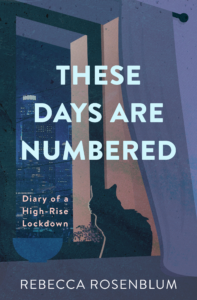 Buy the book: