
June 11th, 2023
Douglas Adams and the Meaning of Kentucky
When I was a kid I was a completist–if I really liked an author, I would work my way through their entire oeuvre until I either exhausted it or they delved so deeply into another genre (included the genre of being less good) that I couldn’t follow. I no longer read in this way for the most part, partly due to lack of time, partly because most books don’t need to be read in the context of an author’s whole career, but I admit it was kind of a nice way to read. Occasionally I still do it, and there are few authors I’m staying with publication by publication, so we are taking their careers together in real time.
One author I read in his totality when I was a kid is Douglas Adams. I imagine a lot of kids do this–he is just a captivating writer for a certain type of goofy imagination. He also died shortly after I ceased to be a child, so stays forever in the realm of nostalgia for me, even as I reread at least one of his books every few years. Back when I was a snap, I read all the Hitchhikers Guide to the Galaxy books, and then later the unfinished fragment in The Salmon of Doubt and later still the completely unnecessary “sixth book in the series by Eoin Colfer, And Another Thing, which was perfectly fine but so unlikely Adams’s voice as to cause a new wave of grief for Adams’s early death. I read the two Dirk Gently’s Holistic Detective Agency books, which are good too, and so was the recent BBC series that took no actual content from the books, just the character and general vibe. I read Last Chance to See, which was about endangered species and really quite profound. And I read The Meaning of Liff and The Deeper Meaning of Liff.
These two very silly books left me a bit cold, even though I doggedly slogged through them. They are dictionary books consisting of place names, repurposed as words with definitions, invented by Adams. His theory was that place names are “wasted” when they could be words with meanings, and so he made them into what they could be. The books are little dictionaries. There were a bunch of funny ones, a few I liked especially for being mildly dirty jokes, and one that actually joined my vocabulary as a word.
Shakespeare invented dozens of words, Dan Savage has created a few–but honestly, one is pretty good for to take hold and come to common use. It’s “kentucky”–definition, “to fit neatly in the exact space available. So if you have one inch of space left on the shelf and a book with a one inch spine needs to go in there, it will slide in “nice and kentucky.” Isn’t that…right? Adams did have an ear for such things.
Even Mark has started to use the word in every day conversation–and he’s not an Adams fan, to such an extent that when he turned 42 I had to explain the joke to him. He has since gone on to listen to the Stephen Fry audio book of The Hitchhiker’s Guide to the Galaxy and enjoyed it very much. I was delighted and asked him if he’d read the other four, but Mark was good stopping at one. Mildly troubling to me, since the best book in the series to me is actually the fourth, So Long and Thanks for All the Fish (would love to know other people’s favourites!). There’s plenty of authors who have made a huge impression on me and whose work I think of regularly, but Adams is really up there. And kentucky really fills (exactly) a gap in the language.

June 9th, 2023
These Days Are Numbered Is Coming
It’s wild to say but sometimes I go out without a mask and my book about the pandemic will be out in five days, two things that imply that the pandemic is–if not over–certainly somewhat on the wane. The book is actually out in small ways right now–I have had copies in my home for a few weeks and it’s just gorgeous, and a couple weekends ago I did a little signing at Toronto Word on the Street, which felt appropriately unglamourous (my signing stand faced away from the street, onto a patch of grass and nothing) and also ultra glamourous (somehow people found me anyway and eventually the stand sold out of my book!) And next week, TDAN hits the world–I’m so proud and pleased with it. You can see the full writeup, with description, blurbs and buy links, on Books page of this site, or just go over to the Linktree for purchasing options.
OR you could check out this playlist I made of songs I listened to around the writing of the book.
I always see writers releasing playlists to go along with their books, sharing all the songs that inspired the work, and I always want to do that, but the truth is, I can no longer do long, complex tasks requiring deep concentration to music. I used to–if you wanted a playlist of music I wrote my undergrad thesis to, I could sort that right out–but now I find it too distracting from anything hard. Music is for relaxing, easy things, or sometimes just doing nothing but listening to the music itself. I told this to my much-younger colleague, who was horrified–I told this to my mother who said just wait, she can’t even focus on an easy task if there’s music on. SO!
BUT this most recent book was pretty easy to write, because I didn’t know I was writing a book–I just wrote little nibbly posts whenever I felt like it and didn’t worry too much about them, so sometimes there was music on and generally throughout the pandemic there was a vibe of music on often to cheer myself.
SO at long last I was able to make a book playlist and here you go–enjoy! There’s a story behind a few of the songs–the first and last are specifically about counting, and I believe the Alan Parsons one was where my friend Shannon drew the inspo for the title (Shannon came up with the book’s title). A number of the songs are just upbeat bops–Underdog is from the first season of Ted Lasso and A Better Son/Daughter is from the first Hannah Gadsby special, so there’s some tie-ins. Basically, anything that made me feel good. There’s tonnes more of this on my phone–I cut it off at about an album’s worth, though I may pad it out later… Listen when feeling sad or boxed in, and let me know your lockdown jams!
And finally you could…come to the launch! The book launch for These Days Are Numbered will be July 18 from 6-8 pm at Queen Books on Queen Street East and I think it will be just lovely–hope you can come. But if you can’t, please let me know where I should try to come–I do hope to organize more events, though I have been a little slow to do so as yet…
May 29th, 2023
The Secret History
I read The Secret History in a panic because I want to join a new book club and it’s the first book and hard to get ahold of, and I could only get a 7-day loan from the library. But as it turned out, it’s the sort of book that it makes sense to scream through, all 524 pages of it–it’s just a blast. It’s from 1992 and apparently everyone’s read it but me, but just in case: it’s about a kid from California named Richard Papen who transfers in to a private Vermont college at the beginning of his third year. He likes studying ancient Greek, but it turns out the only way to take it at this college is in a tiny elite class with an eccentric, independently wealthy professor named Julian who doesn’t even draw a salary from the school and who handpicks all his students. It’s a struggle, but Richard gets into the class, Julian makes him drop almost every other class and study mainly with him and these five other kids. You NEVER find out why Julian insists on this, what the point of being so isolated and weird is, how the other students were chosen for the class (they are varying degrees of good at/interested in Greek) or why they couldn’t just have a normal collegiate experience–or why Julian wants to teach at this college for no money and spend all his time with this tiny group of students for every class. I thought this set of oddnesses was going to be the central mystery of the book but none of it never gets explained and this is very annoying. That whole spiel above just a very complicated background setup for the rest of the book.
Richard is poor, erudite, pretentious, and desperate to fit in. The other students in his class are mainly wealthy, even more erudite, pretentious, and after a pause, willing to accept him, more or less. They have a very brief halcyon period of hanging around campus and someone’s country house, where they do things like go out in a rowboat and play cards and croquet, and drink champagne out of a teapot. This was around the time I began to wonder when the book is set–the Greek class wears suits and ties (dresses for the lone girl) to school, takes baths every day (you wouldn’t think this would come up, but it does), and are forever drinking hard liquor and mixed drinks and champagne even though they are university students. The intersections between the Greek class, which seems to live in the Edwardian period, and the rest of the school, which you eventually discover is living the 1980s, are brief and rare (and very funny) in the early chapters–someone accidentally wanders into a slam dance and reacts violently, someone wearing jean shorts tries to invite someone wearing a suit to a party. In later chapters, when things are falling apart, the present day creeps into the ancient world a lot more, and you hear mention of cd cases, Twinkies, rap music, beer cans. At one point, worried about how a criminal act is being seen in the media, one member of the Greek class asks another, “How much do you think a TV costs?” (they wind up stealing one) I thought it might have been an effort to convey how hard the characters were working to keep up their illusions and how they started, slowly and then not so slowly, to crumble. I actually do not know what it was, but I don’t entirely care–I LOVED the weird temporal/atemporal stuff, even if I did not completely get it or know what there was to be gotten.
This is such a weird book in that sometimes I thought Donna Tartt was not trying very hard to keep certain balls in the air, but she’s such a good writer that it’s fun to bounce along even when balls hit the ground from time to time–that sense of period was one, and the setting was another. No one has ever conveyed the gorgeousness and intense seclusion of an exclusive Vermont college better than Richard Papen’s voice in this book–and I’m not sure anyone has ever ridiculed California more intensely. Oh wow, poor Plano–but also, how brilliantly does Tartt/Papen bring the chainlink fences and gas stations to naked exposure. As I recall, there’s a few other things out in Cali, but not in this rendering, and I believed it. Richard Papen is a convincing perspective.
Onto the crimes–THAT’S the central mystery of the novel–Julian all but disappears early on, they do continue to study Greek but more as an aesthetic rather than academic pursuit, and the whole novel becomes about a string of bizarre crimes, their coverup, and the related undoing of the characters over them.
The first one–a fairly random murder of an unknown character–takes place off-stage and for reasons that don’t make sense to me and never really gets explained. The second is centrepiece of the book and has a huge buildup and fallout and is, in its way, truly devastating. It is a testimony to Donna Tartt’s brilliance as as a writer that when I was in the book I rarely thought “There is no reason for sane people to behave like this,” but later I would be mulling it over, or trying to describe it why I liked the book so much to Mark, and couldn’t string it together. You cannot start from the middle here–Tartt draws you in, and makes the reader morally complicit in a string of horrifying acts.–it’s truly bananas, in the end, and that’s fine as long as you’re completely engrossed. You sink deeper and deeper into the morass, and as the characters become brainwashed that they “must” do the inexcusable, the reader wavers on the verge of believing it too. What choice do they have, really? Or do they? Or what? That’s good writing… A lot of the last third is the characters of course being consumed by guilt, drinking and agonizing and doing drugs and fighting, but the whole time I was sort of hoping it would work out for them. The heinous
There’s a BIG fan base for this novel on the internet–while I was being jazzed at how much I loved it (I feel like the above does not sound very positive, but in my way I truly did) I read a lot of it. A lot of folks complain about the lack of a movie or TV adaptation, but to my mind, there IS one–the Shonda Rhimes How to Get Away with a Murder that ran from 2014 to 2020 and starred Viola Davis as the charismatic (and much more present) professor. In that show, the study group was for law, not Greek, which was a bit more on the nose if you’re dealing with the students committing crimes. As well, the clever temporal/atemporal tricks that Tartt performs were absent, as were most of the details about setting. There’s also no lens character, since it is TV, and the perspective flits around amongst the group, although…with seasons to play out it’s a long game but I did sense who the more doomed characters were early on. Yes, I watched a lot of that show too, years before I read the novel, and loved it too in its very different way. Less artful and more soapy than the novel, but more contemporary and less hidebound (the queer character has more to do than just be sad and closeted–he is the most interesting, probably, other than the prof)–both have their charms. I tried my “How to Get Away with Murder is a ripoff of The Secret History” theory on a friend who had read/watched both, and she said, “it’s not a ripoff, it’s a genre,” with other books, tv, and films about groups of young people who fell under the spells of charismatic leaders and then did terrible things. I’m curious about that, not sure, but it is odd that no one else on the whole internet has connected TSH with HtGAWM so…
The book club meets tomorrow and I wanted to get this written so that I would have a record of what I thought before I heard too many more opinions–I am pretty impressionable these days. But this book is amazing and the sort thing you can completely lose yourself in and I recommend it highly!
February 24th, 2023
Six Years Gone
When I talk about my dad I often mention that I don’t take after him very much. When my mom walks into a room where people know me, or I walk into one where people know her, we can be identified on sight, we resemble each other so much, and it’s not just physical either, but my dad and I…less so. But today, six years after his death, here is a list of things we did/do have in common:
- Jerry generally ordered the most interesting things on the menu, even if they were also things that could turn out to be bad. He quite often ended up mournfully picking at a weird stew but he also had some fantastic bouillabaisses over the years, and he never gave up believing in the special of the day. After years of sticking with my favourites, somewhere in my thirties I became more like that. I unusually want the most interesting thing I can order, and am often disappointed–and often not.
- We are both green thumbs, mainly because he taught me to be. My dad taught me that the art of taking care of plants, as with taking care of anything, is labour and paying attention. I mean, and also weeding, which sucks.
- We are both nosy about the lives of strangers, which is funny for a couple reasons. I am nosy about everybody, but my father was not overly curious about the lives of people in nearer proximity, like neighbours and colleagues, probably because they would have the ability to nose right back–my father was an incredibly private person (when someone comments that I wasn’t a very rebellious kid, I sometimes retort/want to retort that we are all rebelling against different things). But he did like to know about random people at the library or on the street. He once met a waitress at a Pizza Hut in Atlanta whom he talked about for years. My father liked people who were at a slight remove from him and knew it, and could joke about the distance. My favourite one of these was his “machine guy,” who would fix his two lawnmowers and rototiller (he had a vast property and garden) every spring and fall. They had a relationship spanning decades, although I have no idea about the guy’s name. The guy was a motorcycle enthusiast who did the Friday the 13th Port Dover Rally, if you are familiar. One year it took extra long to get the lawn mowers working in the spring and my father was anxious about the lawn getting “too long,” by his standards. He called the guy (repeatedly, I imagine) who said, “I know, I know–it’s taking too long. I go to my therapist, you’re all I talk about.”
- We both want to pet all the cats, look at all the birds, feed all the horses–all the animals, all the time. My father’s original dream for me, when I was probably only about three or so, was that I would be an ornithologist, because I liked looking at a dead bird I found on the road (why was this happening? lost to time). My parents took me to the children’s museum to see more dead birds (again, why?) and many zoos and any farm where you could see a horse, which were conveniently plentiful in our neck of the woods. One dusk we sat in lawn chairs in the backyard and 1000 starlings flocked in our yard, I don’t know why. We always pointed out hawks to each other. Mark was very startled by the phrase “that’s a good-looking dog” when I first pointed one out on the sidewalk, but now he uses it too–it originated with my father.
- This list could go on and on–I’m having a tough time, I don’t know why no one tells you about year six. But I’ll end it here. We both are happy for other people to have a good time. I’m not always as generous as I want to be–working on it–but I’m always glad to see if someone else can have some fun even if I can’t. I always wanted my roommates to go to parties even if I had to stay home and study, I would like to hear all about your glamourous vacation, I always hope Mark will get to go on good guys night and drink a million beers. My dad was the same way. The last gift he ever gave me was a last-minute plane ticket on boxing day–not cheap–to go and see my in-laws. I had been supposed to spend Christmas out there but because he was so sick I didn’t go, but he didn’t want me to miss the whole trip, so he and my mom got me the ticket to go later. He said over and over how happy it made him to image me having a good time. He died less than two months later.
February 20th, 2023
These Days Are Numbered Anticipatory FAQ
My new book is coming, my new book THESE DAYS ARE NUMBERED: DIARY OF A HIGH-RISE LOCKDOWN is coming! Pretty soon! I am excited, and buoyed by kind friends who ask about it and ask supportive things, often about how to be MORE supportive. I haven’t exactly been deluged with such questions but the book is still months away from publication so I’m just getting ready with this helpful FAQ–also this is something constructive for me to do with my nervous anticipation.
When is your pub date? June 13, 2023 in Canada. Less than four months away–just around the corner!
Will your book be available in the U.S.? Yes, it will. TDARN (OOOH, what a good acronym–I just discovered that) should be available from all major retailers at least for order July 13, 2023 (one month after Canadian launch)–it’s available already for pre-order in many U.S. sites. Judging by my non-existent level of fame in the U.S., probably not a lot of availability in-store, but you never know.
What about other places outside of the U.S. and Canada? I don’t know–maybe? I’ll get back to you.
How about an audiobook? YES!! I just found about this and I’m really excited, but I don’t have a lot of details like when it’ll be available or who the narrator is or anything. But I bet it’ll be amazing.
Will there be a launch? Yes, definitely, somehow or other. I don’t have a firm plan in mind but I will figure it out–I love launches. I am extremely open to suggestions (and/or help of any kind) on this so if you have been thinking “I really hope RR has X kind of launch for this book at Y venue” or similar, now is your time!!
I want to support you/your book: should I pre-order or buy at the launch? Ebook or print? Gosh people are kind–this isn’t FAQ puppeteering, I have truly been asked this. First off, being nice to a writer in any format–snacks, hugs, soothing words–is all lovely. You don’t have to buy a book. Second, buying a book is very helpful, and you don’t need to worry about buying it in the EXACT RIGHT WAY–I’m truly touched anyone would ever spend their money to read what I wrote…and it all goes into Booknet anyway. BUT if you want to help the absolute most, pre-orders are the best. Ebook or print doesn’t matter, in some cases writers make a bit more $$ from independent bookstores sales than big chains–and also, indies are just better for the book ecosystem–but really do what works for you. Kathryn Mockler wrote this great article on preordering, the upshot of which is yes it helps and it’s pretty easy if you’re so inclined. Kathryn suggests searching Bookmanager for where the book you want available for preorder at an independent bookstore near you. Another really great idea is to pre-order from the library. Either way you get your book earlier and support the author too.
What are other ways to support a new book? Off the top of my head? Tag it as “want to read” on Goodreads or your bibilofiler of choice, come to events either virtually or in person, read the book and let me know what you think (my fave!), review the book online somewhere, tell your friends about it if it seems like their jam. But also don’t worry about it–doing anything from this list would be lovely but no writer would be mad if you forgot. Buy the books that interest you and that you can afford, get a few more from the library, come out to events that sound fun and you have time for, say something positive on socials when you think of it, give a writer a kindly hug or fist bump when we seem agitated, and let’s go team books!
February 1st, 2023
Against Bookism
At the end of the year, folks were tallying up their book lists, doing best-of-the-year lists but also just of-the-year counts, how many total, by genre, by gender, compared to last year, everything. Stats are interesting, I suppose–I like data too–but it made me nervous. Because why do people count books? I feel like we tally things we should do, or want to want to do, like workouts and days without a safety incident, and not things we just gravitate towards joyfully, like tv shows and cheese. In all the 2022 tallies I saw on socials in December, no one said, “I had 38 cupcakes this year, gonna try to top that in ’23!” So, books, eh–in the same category as cardio and keeping the guard on the bandsaw. I mean, that’s good–but not as good as a cupcake. As a writer and a reader and a producer of books, I sometimes DO feel like a book is delicious. Some books are carrots but some are cupcakes. Aren’t they?
The other things is that as soon as you start measuring you invite comparison. If we’re all counting–and even though I feel like I shouldn’t, I also count books–then there’s a right number we’re trying to get to. Read a little faster, skip a little tv, focus a little better, and crank up that number? Eh, not really–like most things in my life, I seem to have a set point with reading. I have read slightly more than a book a week–about 60 books a year–almost every year since I started counting.
That was almost 17 years ago. The summer between first and second year of my grad school program, I was waiting to meet my thesis supervisor and I wanted to have something to tell him when he finally turned up, so I started keeping a journal of the books I read. Notably, I did not change the books I read to find more impressive ones to enter in the journal–the first one was Necklace of Kisses by Francesca Lia Block, the 6th book in the Weetzie Bat series, which was for teenagers. I didn’t even find an impressive journal–it had a flower on it. My supervisor wound up not caring about it at all but I found it quite useful over the years to take a few sentences of notes on each book I read, just to record my general impression of it, in case I forgot what I had read later or was asked for recommendation.
So I kept it up, through the second year of grad school and on into my next job, the first book I actually wrote, the coming of GoodReads–a similar concept, but too public to write what I actually think of certain books–and on and on. A few more than 60 books some years, a few under others–way under that the first year of the pando, but I am back at capacity now, baby! I like reading, like books, like thinking about them and…if I’m being really honest, I like counting them. BUT WHY?? I don’t think about books as medicinal, I swear I don’t, but I just like to tote them up. They aren’t vegetables, mainly–cupcakes, mainly cupcakes! But I want to count them.
I finished my 1000th book on Saturday. The Sleep of Apples by Ami Sands Brodoff. I enjoyed the book, a collections of linked stories, but I also got that frisson when I finished it of knowing I had hit 1000. Three diaries, almost 17 years, and 1000 books. I judge myself so harshly for this but also–just so excited for 1001. What is this impulse?
January 21st, 2023
Work Objects
There were certain things I kept in my office at Old Job that, while very useful there, I struggled to find context for anywhere else. I put up most of the art but my home office is looking a little crowded, and I never found a place for most of the little desk toys. I started bringing them into new office, but that one is shared, and also things started disappearing almost immediately. I do not suspect my colleagues, as I share my Kleenexes and snacks with them freely so I don’t think they’d have reason to take the whole boxes, so I guess it’s cleaners? Anyway, this means I don’t really bring much into the office that I actually like–anyway there’s no space for it. Just a typing stand, a couple posters, and a pair of low-value indoor shoes. Also I’m not supposed to have food in there anyway, due to creatures–which was actually a rule or at least a concern at the old office but I circumnavigated it with a tightly sealed cookie tin. This time, I’m there less space, there’s more concern, and I also just don’t have the energy. No food. And no scented body products, even the lightly scented lipbalm I enjoy, as we work more or less on top of each other and i would hate to be that person.
SO–some of the toys and art are still packed up, awaiting a bigger office. I ate most of the original snacks upon retrieval from the office in summer 2020, but oddly, today, I am finishing the last of my office popcorn–it still mainly popped. You can buy a big bag of loose kernels and pop a handful at a time in the microwave in folded paper bags, which is both cheap and healthy, and I used to do it all the time when I could keep snacks at work and had easy access to a microwave. Recommended if you still do. I probably won’t buy more as this just doesn’t seem like a home snack to me–I’m enjoying it, but it doesn’t make sense in this context.
I briefly felt that way about my favourite tea, Stash Liquorice Spice, which is the only tea I drink because I like it and not because I’m cold or trying to be polite. I salvaged a few boxes from the old office but initially, I did not have any interest in drinking it without my tea-drinking colleague and friend, as I had consumed tea almost exclusively in her company for so long. I have gone back to drinking it now and it’s still good tea, but not quite as good. A pretty wooden catch-all tray another friend gave me sat on my desk for years but has no place in the new office, so it has moved home and houses the remote controls in the living room. That is actually an improvement on the old order, when we stacked the coasters on top of them.
I had to give away a number of things immediately upon being laid off–mainly my father’s larger gardening implements, the spades and the hose. It’s hard to remember this now, but it was winter in March 2020, and I had been storing things for the allotment garden plot across the way in my office until it was time to get back to work. It was an odd arrangement but it was working–it was a big office–until the world stopped working and things had to be rearranged.
I just found that strawberry-scented lipbalm again too–the smell really is a little strong, so I mainly just wear it at home. Mark doesn’t care. Today, eating the popcorn, wearing the lipbalm, nearly three years after so much changed–but not everything–I still feel really sad for that time and that place. Not the popcorn, not being able to keep 30 feet of hose in my office, though certainly those are nice things. Just the people, the friendships, many of which I still have–those are what matter of course. But also that nice little rhythm I had there for a while–is it a rut if you wouldn’t choose to be elsewhere? I doubt I’ll have anything similar again and I’m truly sorry about that, whatever brilliant the future may hold.
January 13th, 2023
Ta da!
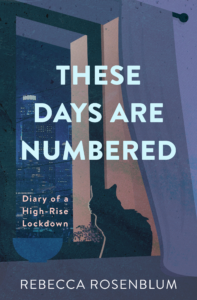
Look, a new book! Well, a new book cover, but I’m pretty pleased! In some ways, the book cover is the sweetest part of the book publishing process, because I didn’t have to do anything, but it’s so so lovely, and everyone, even non-readers, like lovely book covers. Designed by the very talented Laura Boyle at Dundurn. You will also note that this same cover appears in mini, along with some pre-order links, in the right-hand nav of this page. I haven’t had a new image over there in oh…six…seven years? Quite some time, anyway. I feel it really jazzes the place up. Anyway, please do pre-order if you are so inclined, but definitely definitely glory in the book cover, which is exactly what the vibe of the book is.

January 8th, 2023
The Joys of Getting It Wrong
The nice thing about a world post-death of the author–if that death is presumed, in a Barthian way to mean that once text passes from author to reader, the author “dies” and all that is known is how the reader interprets the work and not any ideas or intentions the author may have had about how the reader should read–is, wherever you go with a book, there you are. (I’m madly over-simplifying, but if you wanted very serious complicated literary criticism, well, I have terrible news for you about this post!) You can be pretty sure, VERY sure, that was not the plan of the author or publisher or school of thought it was produced by or for but–oh well! There’s all kinds of joys to be found in strange places.
Of course, we do know certain things about authorial intentionality a lot of the time, and/or at least context. It’s not that I don’t acknowledge those those things–it’s just that I do not always care. I wanted to read <i>White Noise</i> because the film was coming out at the end of last month and Mark was excited, having always loved the book since he first read it in first-year university and he thought I would like it too, so I agreed to read it first and then watch the film with him. Right away, I saw what Mark saw: the laser-eyed lists, the hilarious details, the po-mo absurdity but also warmth of the family and friendship–I love it. For a book that is so hailed as serious and respectable, WN is funny af and a lot of fun to read.
However–published in 1985 and set, one imagines, a year or two before that, as novels tend to be, WN is also seemingly (who knows what the author’s intent might be? ;)) a critique of materialist culture where the centre of worship is the supermarket or the TV and everyone huddles around the news just to feel alive. The family shops and memorizes jingles and struggles to remember trivia; they rehearse constantly what they will do in case of disaster but cannot discuss they memory or the impact of real ones. Hitler is reduced to the site of academic achievements; car crashes too. It’s a weird and desensitized world DeLillo has created.
The protagonist, Jack Gladney is a prof at a small university and lives with his wife and kids in a big house near the school. It wasn’t until I started watching the movie that I realized how strongly I identified with that family–when I saw the house in the film, I was weirded out that it was MY house. I too grew up with a professor dad in a big house with my mom and sibling in the 1980s–I’m about the age of the younger Gladney kids. DeLillo’s literary project–among others–in this project was to show how over saturated and trivialized American family life had become, but to me it seems positively dreamy and quaint. The family has one TV they all gather to watch, and they move it from room to room, clustering together in an animal heap wherever it goes. They eat meals together and drive everywhere together in the only family car, a station wagon–everyone goes everywhere together. They are always sitting on each other’s beds, chatting, watching each other do tasks or chores, bickering. There was no way to get in touch with anyone outside the house without walking to a plugged in phone handset and dialling their number and seeing if perhaps they were home–or else, you could physically go looking for them. They supermarket is the apex environment but the family goes as a unit to shop, and often meets friends and neighbours there and CHATS. It was sweet and lovely, and completely at odds with what I think was DeLillo’s project of making the 1980s seem over-commercialized and harsh–it seemed loving and quaint to me.
I would move into this book immediately if I could, or at least visit for a while. But of course, I already lived there once. Of course, this reading is wildly coloured by my life experience, as is anyone. Perhaps there will be a future school of criticism about the death of the reader, but I don’t know how that would be possible and also it would be too sad.
January 2nd, 2023
End/Begin
Enough people were on twitter denouncing folks’ end-of-year summaries as “bragging” if they were too positive that I was reminded that it might not be so terrible if that site just immolates. Of course, I’m not immune to reading some “I did many things in 2022” posts and feeling I didn’t do enough, or did the wrong things, but that’s a human feeling and not on others to correct for me. Or hey, if you have a solution, one that’s not hiding your own light under a bushel, I’d love to hear it.
In 2022, I had bed bugs twice; Covid; radical under employment; a new book contract; a trip to France to see a dear friend and also the Mediterranean Sea; far more hugs than in the previous two years; fascinating freelance; some over employment; a tonne of support and encouragement, some from quarters I never would have expected it from; some strange and surprising days when people I would have expected to support me or at least say something vaguely kind just didn’t; a really lovely summer; a very challenging time editing that new book; a pretty healthy family (now that the year is over I can say that without feeling it’s a jinx…right?); a wildly hard new job and deeply kind new colleagues; a gorgeous time standing up in a wedding for beautiful friends; a new commute I adore but that eats a lot of time; many migraines; work travel; so many great books and great shows and great movies and great songs. I felt, in 2022, I had the world again, a little bit.
I also found 2022 pretty hard, although as always I am writing in the mood of whatever just happened, and I found the holidays tricky and not as restful as usual this year, probably at least in part because I had to work the Christmas-to-New Year’s stretch for the first time in years, and had a bad migraine that week, all week (and currently, too).
I don’t think it’s poor form to admit things are hard, just like I don’t think it’s rude to say when things are great–even on twitter. In general, I find when someone asks how I am or how something has gone and I say “bad,” they appreciate the honesty or at least are hoping for an interesting story. But I also do sense a push towards framing even negative events in a positive package–“But you learned a lot for the future, right?” “But it’s funny in retrospect, right?” Sometimes… Sometimes I never learn a lesson or get the joke, or it was a lesson/joke I could have done happily without. It’s stressful not to be able to share something painful about my life until I have found the silver lining, but I think it might also be stressful to talk to me about things that have two sides to them but have me only look at the negative. Toxic positivity is a relatively new concept but the older one, toxic negativity, is very much alive and kicking. Both are problems.
My resolution this year is to look at the positive more in all aspects of life. You can probably tell in the above paragraph that I am not completely sold on this plan yet–but I am going to work on it.
 Buy the book: